Last updated August 3, 2026 with the FTC’s newly released 2025 fraud data and an added citation for the multifactor authentication research.
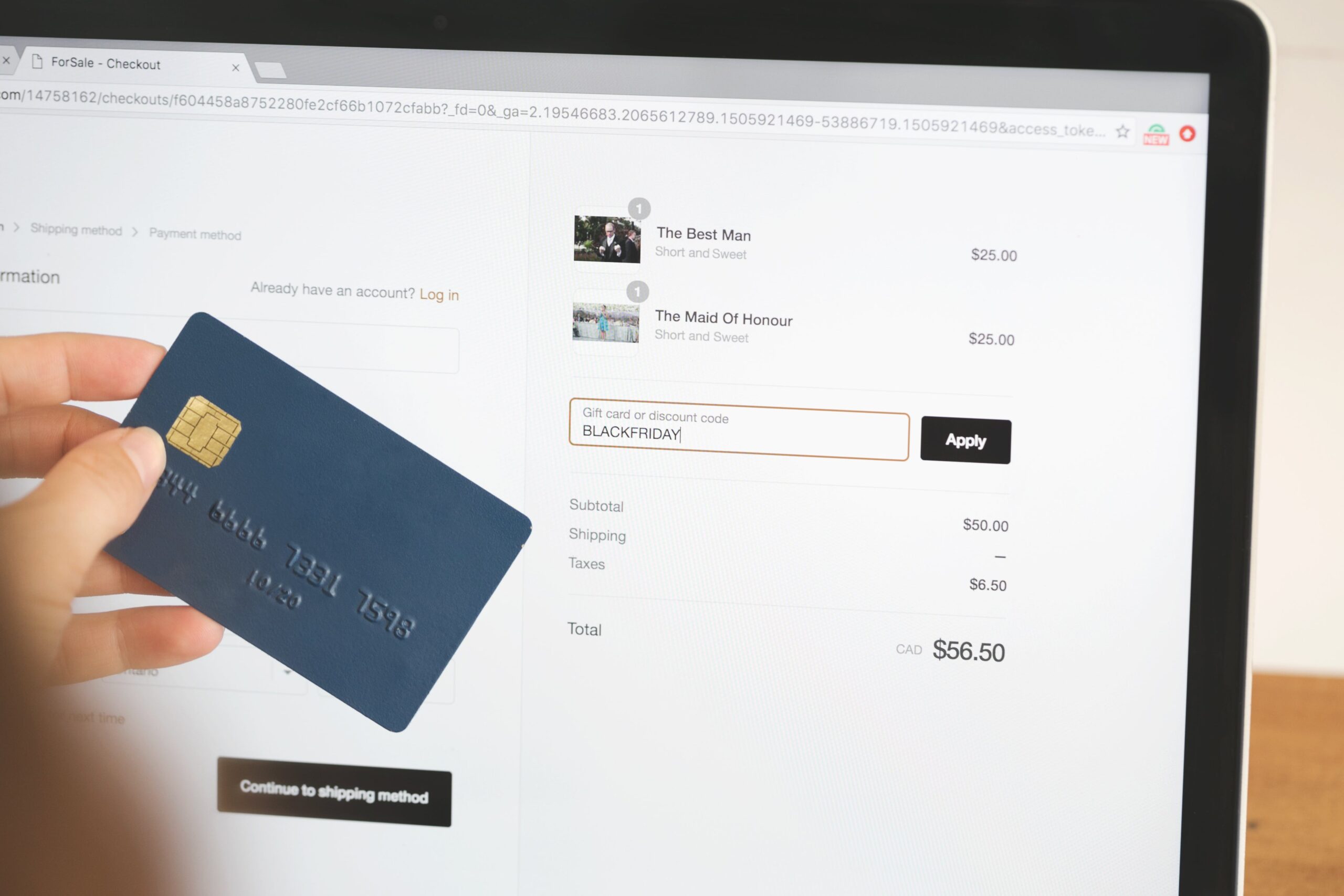
Gift cards are one of the most popular gifting options worldwide, valued for their convenience and flexibility. The same convenience that makes them appealing to consumers makes them an attractive target for fraudsters. Bad actors keep finding new ways to exploit gift card systems to steal balances, launder stolen funds, and run broader scams.
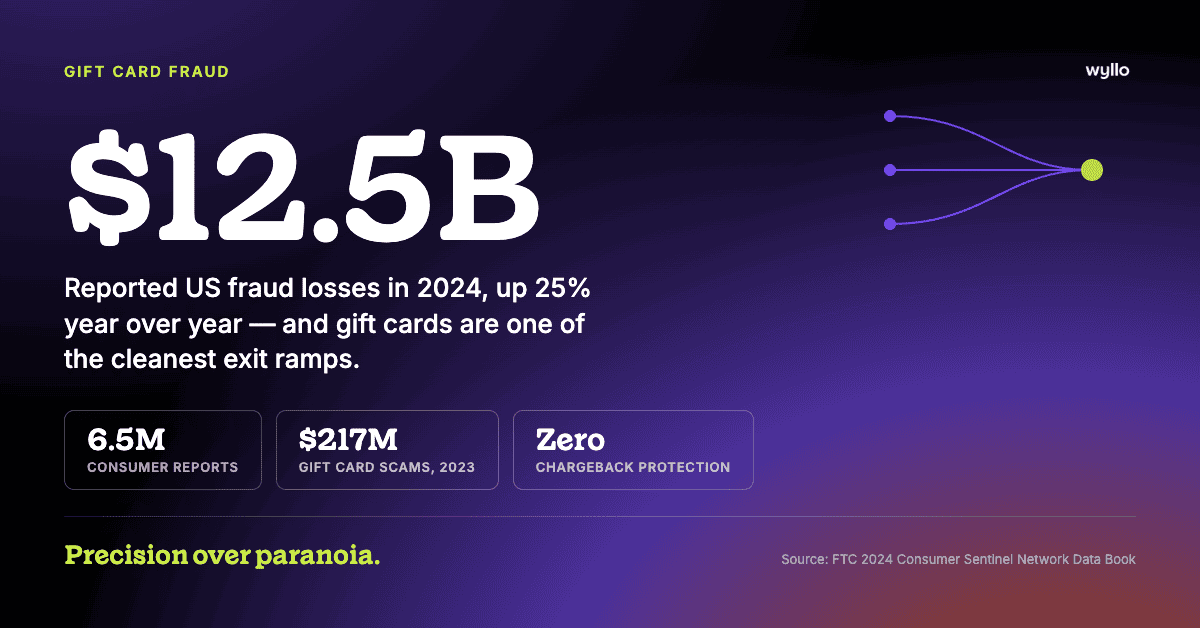
The numbers underline the urgency. The FTC’s 2025 fraud data shows US consumers reported losing $15.9 billion to fraud in 2025, up 27% from $12.5 billion the year before. Gift card fraud specifically accounted for hundreds of millions in losses in recent years, with the FTC’s 2023 Consumer Sentinel data putting gift card-related scams at $217 million out of $10 billion in total reported scam losses.
For ecommerce CX leaders, gift card fraud creates a specific operational problem: customers report drained balances, demand refunds, file chargebacks, and expect immediate resolution. CX teams sit on the front line of every dispute. Without the right signals, every gift card complaint feels equally credible, and the cost of getting one wrong (false refund on a fraudulent claim, or a denied refund to a real victim) is high either way.
This guide breaks down how gift card fraud actually works, why gift cards are uniquely vulnerable, and the practical playbook CX leaders can use to catch the patterns without disrupting legitimate customer service.
What Is Gift Card Fraud?
Gift card fraud refers to any deceptive or unauthorized activity involving gift cards, whether as a product (cards being purchased, drained, or resold) or as a payment method (cards being used to launder stolen funds, complete chargeback fraud, or extract refunds). Fraudsters exploit gift cards specifically because the cards behave like cash, lack the chargeback protections that credit cards offer, and require no identity verification at the point of redemption.
The pattern shows up in four common forms.
How Gift Card Scams Happen
Card Draining
Card draining is the practice of stealing gift card balances before the legitimate owner can use them. Three common variants:
- Tampered physical cards. Fraudsters steal inactive gift cards from store displays, scratch off the PIN, record the number, then replace the protective covering. When a real customer buys the card and loads value onto it, the fraudster monitors the balance and redeems it online before the customer can use it.
- Brute-force attacks. Automated bots rapidly test thousands of random gift card number and PIN combinations until they find a valid match. These attacks exploit weak security on gift card backend systems and can drain large volumes of cards in minutes.
- Hacked customer accounts. Account takeover (ATO) attacks give fraudsters access to legitimate accounts with stored gift card balances. The fraudster transfers, redeems, or resells the stored value before the rightful owner notices.
Card draining produces a wave of customer-service tickets: angry, often distressed customers who watched their gift card balance disappear. CX teams have to determine quickly whether the claim is genuine and whether to issue a replacement.
Gift Card Purchase Masking (Low-Value Item Masking)
Fraudsters use stolen credit cards to purchase a low-cost physical item alongside a digital gift card, making the transaction look less suspicious. The inexpensive physical item gets shipped to the legitimate cardholder, who may assume it was sent by mistake or as a promotional sample. The digital gift card gets delivered to the fraudster’s own email address.
The scheme works because digital gift cards are commonly sent as actual gifts, so merchants don’t usually flag transactions where the recipient’s email differs from the buyer’s billing details. By the time the cardholder notices the unauthorized charge, the fraudster has already redeemed or resold the gift card.
This pattern is particularly costly for retailers. It produces chargebacks, customer disputes, and operational time spent tracing fraudulent transactions through systems that weren’t designed to connect the physical item and digital gift card as part of the same scheme. Stronger verification on mismatched-email gift card purchases and unusual buying patterns catches a meaningful share of it.
Refund Scams Using Gift Cards
Fraudsters use stolen credit cards to buy products, then initiate returns demanding the refund in the form of a gift card. The pattern lets them bypass standard fraud detection and effectively launder the stolen funds. Common variants:
- Return fraud. Stolen card buys merchandise. Return for gift card. Resell gift card for cash on a secondary market.
- Item-not-received (INR) refund claims. Customer claims they never received the order or that the product was defective, demanding a refund in the form of a gift card instead of the original payment method (which would route back to the stolen card).
- Employee collusion. Dishonest employees process fraudulent refunds onto gift cards for their own benefit. Rare individually, expensive when it happens.
Gift card refund scams sit at the intersection of payment fraud, return abuse, and policy exploitation. They create chargeback risk, inflate refund costs, complicate inventory reconciliation, and make fraud harder to trace.
Phishing Scams Targeting Gift Cards
One of the oldest fraud tactics in the book, still highly effective. Fraudsters impersonate legitimate businesses, government agencies, or trusted colleagues to trick victims into buying gift cards and providing the codes.
The corporate version of the scam targets employees: a scammer poses as a company executive sending an urgent email asking the employee to buy gift cards for holiday gifts, client appreciation, or a fake employee reward program. The employee buys the cards, sends the codes, and only later realizes the email was a fake.
These scams are particularly hard for businesses to prevent technically, because they rely on social engineering rather than system vulnerabilities. The impact still lands on the retailer, though: victims often seek reimbursement from the store where they purchased the card, adding strain on CX teams who have to make case-by-case calls without clear evidence on either side.
Why Gift Cards Are Such a Prime Target
Gift cards are structurally more vulnerable than other payment methods. Three reasons drive the pattern:
Easy resale. Fraudulently obtained gift cards convert to cash, cryptocurrency, or other instruments quickly through secondary markets. High liquidity makes them appealing for any fraud scheme that needs an exit ramp.
Anonymity. Unlike credit cards, gift cards don’t require identity verification at redemption. The fraudster never has to prove who they are.
No chargeback protection. Credit card fraud victims can reverse fraudulent transactions through the chargeback process. Gift cards lack that protection. Once the balance is stolen, the money is gone.
How CX Leaders Can Catch Gift Card Fraud Without Breaking the Experience
CX teams sit on the operational frontline of gift card fraud. Every drained-balance complaint, every refund demand, every “I never received my card” claim lands in a support queue. The goal isn’t to refuse everyone. It’s to give the team the signal they need to make confident, fast decisions on each case.
Five practical moves:
1. Connect the Signals Across the Customer Journey
Most gift card fraud isn’t visible at any single transaction. It’s visible across the connection between transactions: the low-value item plus digital gift card pattern, the account whose balance drained the day after a suspicious login, the customer requesting their fifth gift card refund this quarter. A risk intelligence layer that connects checkout, account, redemption, return, and support signals across the journey catches these patterns the way a single transaction screen never can.
Wyllo CX Support is built specifically for this. Risk scores and next-best actions get embedded directly inside the CX tools your team already uses, so the agent looking at a drained-balance complaint sees the connected pattern in the same moment they’re answering the customer.
2. Flag the Common Gift Card Fraud Patterns
Build alerts for the patterns that consistently signal fraud:
- Digital gift card purchases where the recipient email doesn’t match the buyer’s billing email (especially paired with a low-value physical item on the same order)
- Multiple gift card purchases from the same payment method in a short timeframe
- Logins to accounts with stored gift card balances from unfamiliar geographies or devices, immediately followed by balance redemption
- Refund requests on items that were paid for with newly issued gift cards from suspicious purchases
- Returns specifically requesting refund-to-gift-card on orders paid via credit card
The patterns don’t catch everything individually, but together they catch most of the volume.
3. Strengthen Account Security at the Storage Layer
Most stored gift card balances live inside customer accounts. Strong authentication on those accounts shuts down a meaningful share of account-takeover-driven gift card draining. Microsoft’s research on multifactor authentication found MFA blocks more than 99% of account compromise attacks. Make it default on accounts that can store gift card value, not opt-in.
4. Vet Tampered-Card Patterns Through Returns Data
Physical card tampering produces a specific complaint signature: customers reporting drained balances immediately after activation, often clustered around specific stores or product categories. Returns and complaint data, viewed together, surfaces the pattern faster than any single complaint can.
5. Train CX Teams on the Social-Engineering Side
The phishing variants depend on the team falling for impersonation. Regular awareness training on the patterns (urgent executive requests, vendor impersonation, fake employee reward programs) cuts incident rates significantly. Pair the training with a clear escalation path so suspicious requests get verified, not acted on.
How Wyllo Helps
The thread connecting every type of gift card fraud is the same: signals that look isolated at the transaction level connect at the journey level. Wyllo, the CX-first risk intelligence platform, was built around exactly this kind of connected pattern recognition.
Four products do the most work against gift card fraud:
- Wyllo CX Support embeds risk scores and next-best actions inside your CX tools. The agent looking at a gift card complaint sees the connected context instantly.
- Wyllo Payment Fraud Protection catches the stolen-card purchases of gift cards upstream, before they ever reach the fulfillment system. AI plus human expert review handles the borderline cases where merchant-specific context matters most.
- Wyllo Claim and Policy Abuse Prevention catches the refund scams, INR claims, and account takeover patterns that gift card fraud often runs through.
- Wyllo Bot and Reseller Detection spots the brute-force gift card number testing, alias-account creation, and coordinated reselling patterns.
Precision over paranoia. Less reaction. More reason. Designed to think ahead, so the CX team gets the signal they need to make confident decisions on every gift card case.
Frequently Asked Questions
What is gift card fraud?
Gift card fraud is any deceptive or unauthorized activity involving gift cards, whether as a product (drained balances, tampered physical cards, brute-forced PINs) or as a payment method (gift cards used to launder stolen funds, complete chargeback fraud, or extract refunds from merchants). Gift cards are uniquely vulnerable because they behave like cash, lack chargeback protection, and require no identity verification at redemption.
How common is gift card fraud?
Significant and growing. The FTC’s 2025 fraud data shows $15.9 billion in reported consumer fraud losses in 2025, up 27% year over year. Gift card-specific fraud has accounted for hundreds of millions in annual losses in recent years.
What is card draining?
Card draining is the practice of stealing gift card balances before the legitimate owner can use them. The most common variants: tampering with physical cards on store displays to capture PINs, brute-force attacks against gift card backend systems using automated bots, and account takeover on customer accounts that store gift card balances.
How can CX teams catch gift card fraud without slowing down legitimate refunds?
Connected signal is the answer. A risk intelligence layer that lets the CX agent see the broader pattern (account behavior, transaction history, prior complaints, related orders) in the same moment they’re responding to a customer makes the difference between guessing on each case and deciding with context. Wyllo CX Support is built for exactly this.
Why are gift cards more vulnerable than credit cards?
Three structural reasons. Gift cards behave like cash and require no identity verification at redemption. They lack chargeback protection, so once a balance is stolen, there’s no reversal mechanism. And they convert easily to cash or cryptocurrency through secondary markets, giving fraudsters a clean exit ramp.
What should I do if a customer reports a drained gift card balance?
Investigate with context. Check the account’s recent login activity, device history, and any related complaints. Look for tampered-card patterns in your returns and complaint data clustered around specific stores or products. If the connected signals point to a real victim (and most do), issue the replacement and document the case for pattern recognition. If the signals point to fraud (repeat refund seeker, suspicious account behavior, prior fraud history), follow your escalation process. A platform like Wyllo CX Support surfaces the signal you need in real time.
Bringing It Together
Gift card fraud isn’t a problem CX leaders can solve by being more vigilant individually. The patterns hide across transactions, accounts, sessions, and time. Catching them requires connected signal across the customer journey, embedded inside the workflows the CX team actually uses, paired with the AI plus human expert review that distinguishes a real victim from a refund scammer.
Curious how a CX-first risk intelligence approach would change how your team handles gift card cases? Start with Wyllo CX Support, or explore the broader Wyllo platform for connected intelligence across the full customer journey.