Last updated July 31, 2026 with 2026 MRC and FTC data, a new section on agentic commerce fraud, a quick answer summary, a threat comparison table, an expanded FAQ, and a full re-sourcing of every statistic.
Ecommerce fraud trends kept evolving while a lot of merchants kept the same defenses. The result, two years in, is a widening gap between what attackers do and what most fraud tools were designed to catch. The patterns aren’t new individually. The volume, the sophistication, the AI-assisted speed, and the shift toward post-purchase abuse have all changed materially.
This guide breaks down the ten categories of ecommerce fraud trends Wyllo’s risk team sees most consistently in 2026, the current data behind each, and practical mitigation playbooks for protecting your business and your trusted customers.
Quick Answer: What are the ecommerce fraud trends in 2026?
Ecommerce fraud in 2026 is defined by ten recurring patterns: phishing, first-party fraud, stolen identity attacks, promo and policy abuse, loyalty fraud, affiliate fraud, reshipping schemes, botnets, triangulation fraud, and the newest entrant, agentic commerce fraud. The structural shift is that refund and policy abuse now outranks payment fraud as the top threat merchants report, and most of the damage happens after checkout rather than at it. That changes the question a merchant has to answer: identity tells you who a shopper is, but only behavior across the full journey tells you what they intend to do.
Key Takeaways
- Refund and policy abuse is now the number one ranked fraud threat in ecommerce, displacing payment fraud for the first time.
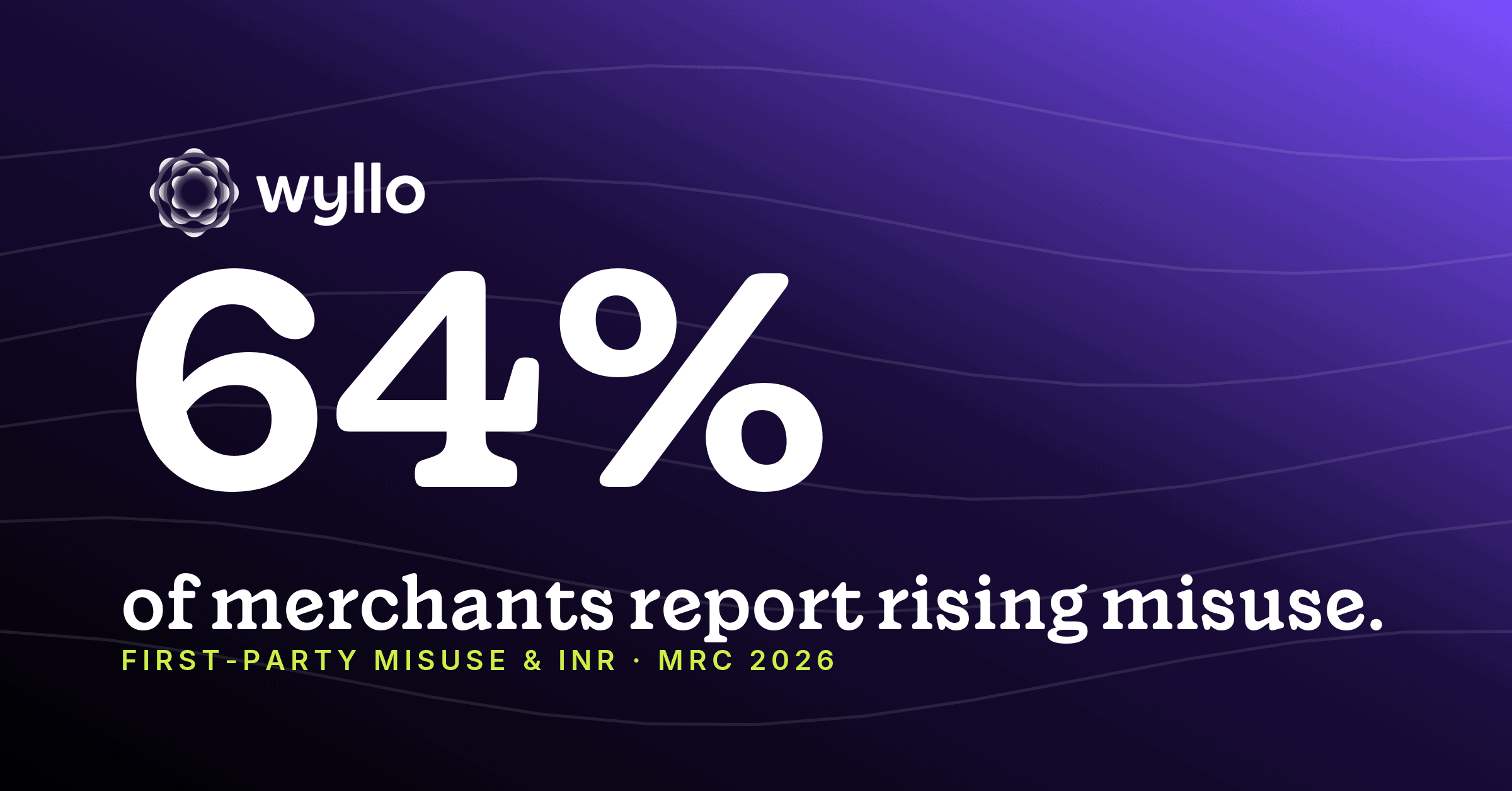
- 64% of merchants report rising first-party misuse, and one in four report increases of 25% or more.
- Reported US fraud losses hit roughly $16 billion in 2025, the highest on record and about 25% higher than 2024.
- Bots generated 57% of ecommerce website traffic during the 2024 holiday season, the first holiday where automated non-DDoS traffic exceeded human shoppers.
- AI shopping agents are creating a new attack surface, and 63% of merchants are already exploring or planning agentic AI payments.
- The merchants improving fastest are the ones reading intent, connecting signals across the full journey rather than scoring transactions in isolation.
Ecommerce Fraud Trends at a Glance
| Fraud Type | What It Is | Who Absorbs the Loss | Earliest Signal |
|---|---|---|---|
| Phishing | Impersonation to harvest credentials or payment data | Merchant and consumer | Brand impersonation, spoofed domains |
| First-party fraud | A real customer disputes or reverses a legitimate purchase | Merchant | Repeat disputes, high return rate |
| Stolen identities | Identity theft, card testing, and account takeover | Merchant | Card retries, new-geography logins |
| Promo and policy abuse | Exploiting discounts, refunds, and return policies | Merchant margin | Account clusters, redemption spikes |
| Loyalty fraud | Illegitimate earning or redemption of points | Merchant and customer | Dormant account activity |
| Affiliate fraud | Manufactured leads, clicks, or attributed sales | Merchant marketing spend | Abnormal conversion rates |
| Reshipping | Packages bought with stolen cards, forwarded abroad | Merchant | Shipping address clusters |
| Botnets | Automated traffic for stuffing, testing, and scraping | Merchant | Traffic spikes, login failures |
| Triangulation | Fake storefront fulfills orders using stolen cards | Legitimate retailer | Too-clean orders, address mismatch |
| Agentic commerce | AI shopping agents deceived or impersonated at scale | Merchant and consumer | Unverified agent traffic |
Do fraud detection tools actually reduce ecommerce fraud?
Short answer: yes, fraud detection tools can keep pace with how attacks have evolved, when they’re advanced enough. The Merchant Risk Council’s 2026 Global eCommerce Payments and Fraud Report drew on 1,278 merchant professionals across 37 countries and found the average merchant faced 3.7 distinct fraud attack types in 2025, down from 4.2 the prior year.
But the picture is uneven. Refund and policy abuse is now the #1 ranked fraud threat across ecommerce, displacing payment fraud at the top of the list for the first time. 64% of merchants report rising first-party misuse, with one in four seeing it grow by 25% or more.
The merchants seeing measurable improvement are the ones who’ve moved beyond rules-based legacy tools. Modern AI detection materially outperforms fixed-threshold legacy systems on both accuracy and false decline rate, and Mastercard’s generative AI work on compromised cards doubled its detection rates. The gap between basic and advanced is no longer marginal.
Below: the ten fraud categories that account for most of what brands are seeing right now in ecommerce fraud trends.
1. Phishing
APWG’s phishing activity data shows phishing-site detection grew from roughly 110,000 sites in October 2019 to over 1 million in September 2024, nearly a 10x increase in five years. The FBI’s IC3 2024 Internet Crime Report named phishing and spoofing the single most reported cybercrime type with 193,407 complaints, and reported phishing losses jumped from $18.7 million in 2023 to $70 million in 2024, a 274% year-over-year increase.
What is phishing?
Phishing is a cybercrime where attackers contact targets by email, phone, or text while posing as a legitimate institution, tricking individuals into providing sensitive information (credentials, payment data, personal identifiers). Both merchants and consumers are exposed. Phishers rely on social engineering because exploiting human trust is usually easier than finding software vulnerabilities.
How Phishing Happens
Deceptive emails that mimic legitimate brand communications, prompting recipients to click malicious links or attachments.
Spoofed websites that imitate real ecommerce platforms; credentials and payment info entered there go straight to the attackers.
Social media scams using direct messages or fake ads that lead shoppers to phishing pages.
Smishing (SMS phishing) posing as store representatives or shipping carriers, prompting the recipient to provide data or download malware.
Spear phishing targeting specific individuals or companies with personalized details to increase credibility.
Vishing (voice phishing) using phone calls to extract personal or financial information directly.
How to Prevent Ecommerce Phishing
- Educate your team and customers on the latest schemes and social-engineering tactics. Run simulated phishing exercises with employees to build pattern recognition.
- Layer in technical defenses. Email filtering, web filtering, and anti-phishing software handle the high-volume bulk attempts. Brand monitoring catches impersonation early.
- Secure your site with HTTPS and train customers to check for the padlock before entering any personal information.
- Require multi-factor authentication on all accounts. Microsoft’s security research found an account is more than 99.9% less likely to be compromised when MFA is enabled, even if the attacker has the password.
- Audit your systems regularly. Most phishing breaches show signal before they cause damage. Routine review catches it earlier.
Related threats: man-in-the-middle (MitM) attacks intercept communications between two parties to steal data, often through rogue Wi-Fi hotspots in public spaces. Customers who connect have their session traffic captured in real time. Gift card scams are the payment leg of many phishing and imposter schemes, since the funds move fast and rarely come back. See 8 Signs You’re Dealing With a Gift Card Scam for the patterns worth training support teams on.
2. First-Party Fraud
The MRC’s 2026 report ranks refund and policy abuse the #1 fraud threat across ecommerce, and Mastercard’s State of Chargebacks 2025 found first-party (friendly) fraud now accounts for more than 45% of all chargebacks. The pattern that defined fraud prevention for the last decade (third-party identity theft) is no longer the leading category. Customers disputing their own legitimate purchases now is.
What is first-party fraud?
First-party fraud happens when a legitimate online shopper deliberately engages in fraudulent activities to gain a financial advantage or obtain goods or services without intending to pay. Unlike traditional fraud, the perpetrator uses their own identity, often paired with economic-hardship justifications.
How First-Party Fraud Happens
Friendly fraud or chargeback fraud: a consumer makes a legitimate transaction and then disputes it as fraud or unauthorized to avoid payment. See the 5 signs a chargeback is actually fraud for the patterns that distinguish first-party fraud from genuine disputes.
Return fraud or refund abuse: customers exploit return policies by claiming a product was not as described, faulty, or that an item was not received (INR) to secure a refund or replacement while keeping the original item.
Overstating financial information: individuals inflate income or assets on credit or buy-now-pay-later applications to qualify for purchases they have no intention of repaying.
How to Prevent First-Party Fraud
- Monitor shopper behavior and block repeat offenders. Advanced analytics surface unusual patterns (high return rates, identical-order clusters across “different” accounts). Repeat offenders go on the blocklist.
- Report repeat offenders to their financial institution. Effective chargeback management requires keeping thorough records and surfacing the evidence when issuers ask.
- Create dynamic return policies. Tailor policies to customer history and risk profile. Trusted shoppers get the lightest possible checks; documented abusers get stricter terms.
- Audit returns and chargebacks regularly. Look for patterns indicating fraud rather than treating each event as isolated.
- Get the pre-purchase experience right. Clear product descriptions, transparent return policies, easy-to-find support paths. A great customer experience deters friendly fraud from shoppers who might otherwise rationalize disputing a charge.
3. Stolen Identities (Identity Theft, Card Testing, Account Takeover)
Three related patterns share the same root: stolen identity credentials harvested from breaches and phishing, then deployed against ecommerce in increasingly sophisticated ways.
- The FTC reported roughly $16 billion in consumer fraud losses in 2025, the highest on record and about 25% higher than 2024. Imposter scams alone accounted for $3.5 billion, with nearly one in three fraud reports naming them.
- TransUnion’s H1 2026 fraud trends report shows a 37% year-over-year increase in the ATO suspected digital fraud rate.
- Mastercard’s card testing research shows roughly a third of global ecommerce merchants face active card-testing attacks.
For more on identity theft and the related impersonation patterns, see how identity fraud hides in plain sight.
Definitions
Identity theft involves the unauthorized acquisition and use of someone’s personal information (name, SSN, card details) to commit fraud. In ecommerce, this manifests as unauthorized transactions, account takeovers, and fraudulent new account creation.
Card testing (or carding) is the practice of running small test transactions on websites to validate stolen card numbers before deploying them on larger fraudulent purchases.
Account takeover occurs when an unauthorized party gains access to a shopper’s ecommerce account, enabling unauthorized purchases, fund siphoning, or theft of stored personal data.
How Stolen-Identity Fraud Happens
Phishing and credential acquisition. Card details and account credentials harvested through phishing, data breaches, or dark-web purchases.
Data breaches. Direct attacks on ecommerce databases to extract personal and payment information at scale.
Credential stuffing. Automated tools test stolen username/password combinations across many sites, exploiting password reuse.
Validation and exploitation. Once a card or account is verified active, it’s deployed for larger fraudulent purchases or resold.
Chargebacks and operational cost. Legitimate cardholders eventually dispute the charges, leaving merchants with chargeback fees, lost merchandise, and threshold-program exposure.
How to Prevent Stolen-Identity Fraud
- Monitor for unusual transaction patterns. Multiple cards from a single IP, rapid retries after declines, logins from new geographies. Real-time machine-learning systems catch these reliably.
- Add CAPTCHA at payment gateways to deter automated card-testing bots.
- Use multiple authentication layers. CVV, address verification (AVS), and step-up authentication on high-risk orders. Multi-factor authentication on customer accounts is the single highest-ROI control.
- Encrypt and tokenize stored data. PCI DSS compliance is baseline; tokenization reduces blast radius if breached.
- Monitor for exposed credentials. Dark-web monitoring services flag leaked customer data so you can prompt password resets before the credentials are deployed against you.
- Educate customers on account security. Strong unique passwords, recognition of phishing patterns, and a clear escalation path for “is this charge from you?” inquiries.
- Watch your chargeback ratio. Visa’s Acquirer Monitoring Program (VAMP) tightened thresholds in 2025, and the merchant Excessive threshold moved to 1.5% in April 2026. Mastercard tightened its own scam merchant rules the same year, which we broke down in the Mastercard scam merchant monitoring guide.
It’s always interesting to see the different ways fraudsters will try to manipulate information to make orders appear legitimate. Merchants should be wary of shoppers who make repeated calls attempting to confirm an order’s legitimacy. Their demeanor can be convincing over the phone, but fraudsters are adept at social engineering, often saying exactly what is needed to win over the trust of customer service representatives, masking the illegitimacy of their orders.
— Irina, Sr. Fraud Analyst at Wyllo
Related threats include payments fraud (any fraudulent activity during a payment transaction), credit grooming or bust-out fraud (building good credit on a stolen or synthetic identity, then maxing it out), and synthetic identities (real and fake information combined to create new identities used for fraudulent accounts).
4. Promo and Policy Abuse
Discounts, coupons, refund policies, and loyalty programs are designed to create great customer experience. They’ve also become one of the most exploited surfaces in ecommerce. The MRC’s 2026 report puts refund and policy abuse at the top of the merchant threat ranking, with 64% reporting the problem is growing and one in four reporting it grew by 25% or more in a single year. The economics are what make it stubborn: each individual abuse event is small enough to wave through, and the aggregate is large enough to move margin.
What Promo and Policy Abuse Looks Like
Discount and coupon abuse: Single-use codes used many times via account multiplication or technical loopholes.
Refund abuse: Manipulating return policies to receive refunds for items that weren’t eligible, were used, or weren’t returned at all.
How Promo and Policy Abuse Happens
- Multiple redemptions through technical loopholes or coordinated account creation.
- Promo-code sharing where exclusive or personalized codes leak to deal sites and spread widely.
- Return-policy exploitation including wardrobing (using and returning) and “free renting” of high-value items.
- Friendly fraud refunds where customers claim non-delivery or damage to secure a refund while keeping the product.
How to Prevent Promo and Policy Abuse
- Single-use, secure coupon codes. Monitor for unusual redemption patterns and audit by IP, device, and account cluster.
- Personalized promotions tied to verified accounts. Require login for redemption; tie codes to a customer record rather than to a general shopper.
- Purchase limits on high-demand or discounted items to deter bulk buying and reseller activity.
- Refund verification. Require proof of purchase. Inspect returns before refunding. Consider store credit instead of cash refunds in higher-risk scenarios.
- Clear policy communication. State return windows, restocking fees, and abuse consequences plainly at the point of sale.
- Continuous learning. Promo-abuse tactics shift. The fraud-prevention tool should be tuning to your specific patterns continuously, not running static rules from twelve months ago.
Related: reseller fraud (unauthorized resale of products through online marketplaces, often exploiting promotional pricing to acquire high volumes for resale at markup). Reseller fraud overlaps with promo abuse but has its own playbook around brand impersonation and channel control.
5. Loyalty Fraud
Loyalty programs concentrate stored value in accounts that are often protected more loosely than the checkout that funds them. That makes them an efficient target, and the damage runs past the points themselves: loyalty fraud quietly erodes the trust the program exists to build.
What is loyalty fraud?
Loyalty fraud occurs when individuals exploit loyalty programs by illegitimately earning or redeeming points or rewards. The methods include account takeover, fake account creation, manipulating program rules, or using stolen card data to accrue points.
How Loyalty Fraud Happens
Account takeover. Fraudsters compromise existing accounts and redeem accumulated points for products, gift cards, or other rewards before the legitimate owner notices.
Point-generation schemes. Exploiting loopholes in earning rules to manufacture points illegitimately (fake purchases, fraudulent referrals).
Synthetic account creation. Creating multiple accounts under false identities and automating activity to meet point-earning thresholds.
Reward trafficking. Selling or trading loyalty points or rewards on unauthorized third-party platforms.
How to Prevent Loyalty Fraud
- Strong authentication on loyalty accounts. Multi-factor authentication is the floor, especially for high-value redemptions or sensitive account changes.
- Behavioral monitoring to spot unusual redemption patterns, point-accrual spikes, or sudden activity from dormant accounts.
- Reward transferability limits. Restrict the ability to transfer points between accounts or trade rewards externally.
- Regular program reviews. Loopholes get discovered. Close them on a defined cadence.
6. Affiliate Fraud
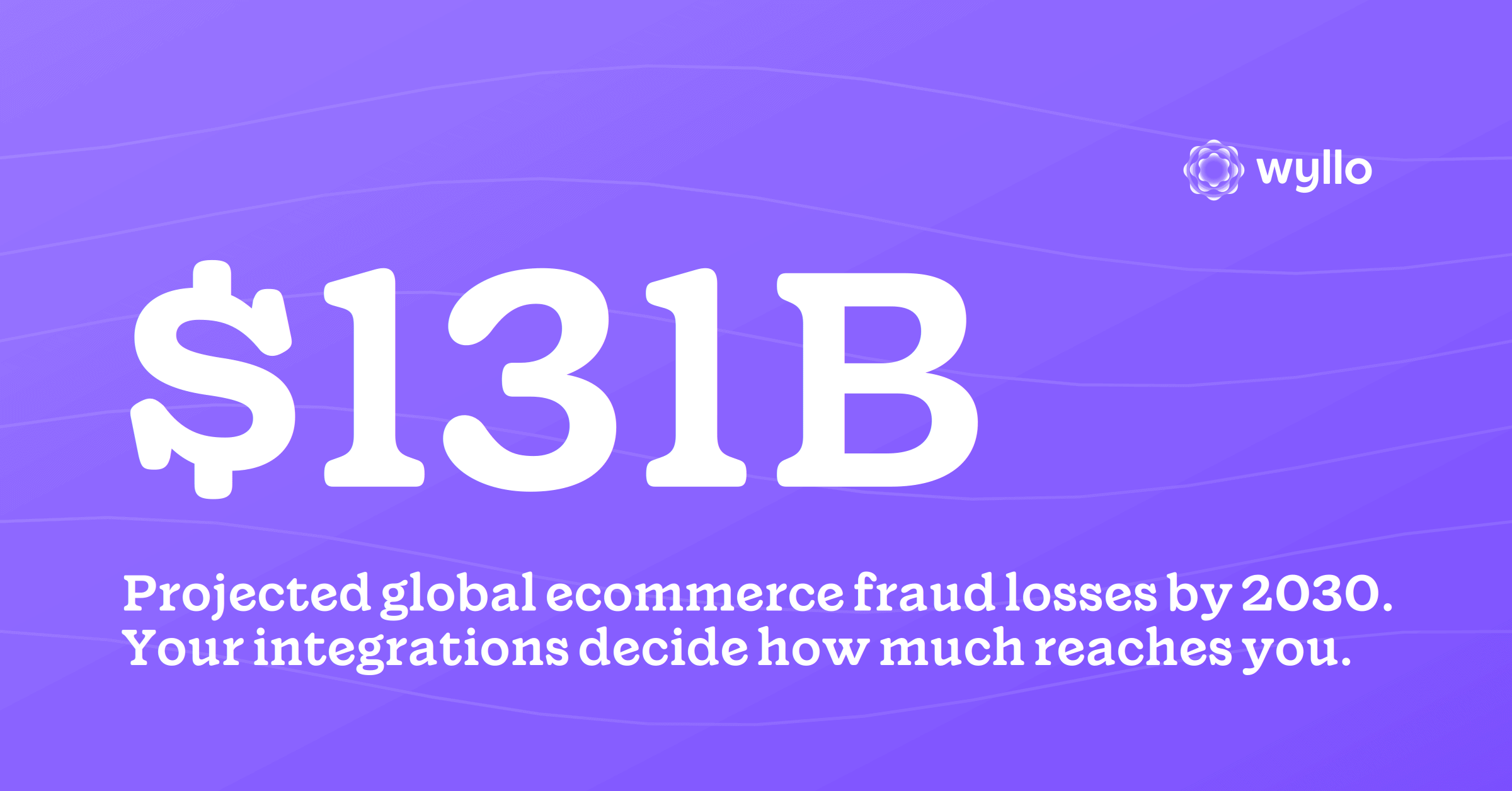
Affiliate marketing is one of the most leveraged growth channels in ecommerce. It’s also one of the most quietly defrauded. Juniper Research found that 22% of all online ad spend, about $84 billion, was lost to ad fraud in 2023, with losses projected to pass $170 billion within five years. Affiliate channels sit inside that number, and they are unusually exposed because the merchant pays on a reported outcome rather than a verified one.
What is affiliate fraud?
Affiliate fraud manipulates affiliate marketing systems to earn commissions or rewards dishonestly. The methods include generating fake leads or sales, using stolen payment data to complete fake purchases, or artificially inflating traffic statistics.
How Affiliate Fraud Happens
Fake leads or transactions generated by automated scripts or stolen user information.
Click fraud that artificially inflates click counts via bots or paid clickers.
Cookie stuffing secretly drops affiliate cookies on users’ computers without their knowledge, claiming undue credit for purchases.
Typosquatting registers misspelled brand domains to redirect users through affiliate links without the user’s explicit intent to visit the merchant.
How to Prevent Affiliate Fraud
- Vet affiliates carefully before and after approval. Continuous monitoring catches the affiliates who pass screening then start gaming the system.
- Use advanced fraud-detection tools that analyze patterns indicating affiliate fraud in real time (abnormal conversion rates, suspicious IP clusters, mismatched traffic patterns).
- Publish clear program guidelines. Explicit rules about acceptable practices, consequences for fraud, and audit rights. Most legitimate affiliates respect these. The fraudulent ones reveal themselves quickly.
7. Reshipping Scams
Reshipping schemes place unsuspecting individuals at risk of criminal involvement while moving stolen-card merchandise across borders. The Better Business Bureau’s job scams study found that roughly 65% of the scam job offers reported to BBB Scam Tracker involved package reshipping, typically advertised as a “warehouse distribution coordinator” role.
What is reshipping?
Reshipping schemes use individuals (often unwitting victims of romance or fake-employment scams) to receive packages purchased with stolen credit cards, then forward those packages to the actual fraudster, usually overseas.
How Reshipping Scams Happen
Recruitment through job postings, social media, or email campaigns offering “work from home” packages-handling roles.
Stolen credit data used to purchase high-value items online, shipped to the reshipper’s address.
Reshipping to the fraudster’s address, often abroad, breaking the chain back to the original card data.
How to Prevent Reshipping Schemes
- Strong account verification on new accounts and high-value transactions.
- Shipping-pattern monitoring. Multiple shipments to addresses linked to known fraud, sudden bursts of activity at a single address, transaction volumes that don’t fit account history.
- Public awareness. When customers understand the risks of reshipping recruitment, fewer get drawn in.
- Collaborate with carriers and law enforcement. Most large carriers have dedicated fraud teams that respond when patterns are reported.
- Strengthen payment processing to detect and decline stolen card data at checkout.
8. Botnets and Automated Attacks
Bots have moved from nuisance to dominant traffic source. F5 Labs’ 2025 Advanced Persistent Bots Report and industry research show that during the 2024 holiday season, 57% of ecommerce website traffic was generated by bots, the first holiday where automated non-DDoS bot traffic exceeded human shoppers. Bad bots accounted for 31% of total internet traffic during that window. Across the year, advanced AI-driven bots now account for nearly 60% of bot traffic, mimicking mouse movements, varying browsing patterns, and timing actions to appear human.
DDoS attacks are climbing too. Cloudflare blocked 20.5 million DDoS attacks in Q1 2025 alone, a 358% increase year over year, with ecommerce among the sectors in the blast radius.
What are botnets?
Networks of hijacked devices controlled by cybercriminals to execute automated tasks against online retail platforms. Botnets enable DDoS attacks, credential-stuffing campaigns, card testing, scraping, and large-scale phishing distribution.
How Botnets Operate
DDoS attacks overwhelm ecommerce sites with traffic from many sources, rendering them inaccessible to legitimate customers.
Credential stuffing and card testing automate login attempts and small-charge validations across many sites and accounts.
Phishing distribution at high volume.
Scraping pricing, product descriptions, and proprietary data to enable counterfeit listings or competitive intelligence operations.
How to Prevent Botnet-Driven Attacks
- Advanced traffic filtering that distinguishes legitimate users from bots and blocks the malicious ones without inconveniencing real customers.
- CAPTCHA verification on suspicious login attempts and high-risk checkout flows.
- Rate limits and access caps on requests from single IPs in defined time windows.
- Regular security audits to identify and patch vulnerabilities before bots discover them.
- Collaboration with ISPs and law enforcement to report and take down command-and-control infrastructure.
As cyber threats continue to evolve, the implementation of 2FA or MFA remains a key defense mechanism for online businesses aiming to protect their assets and customers. Be sure customer accounts and business accounts have MFA enabled. This added layer of security makes it difficult for bots to bypass.
— Ibtissam El Ansari, Sr. Fraud Analyst at Wyllo
9. Triangulation Fraud
Triangulation fraud is hard to size, because the losses arrive disguised as ordinary chargebacks at a retailer who never saw the scheme. The pattern is particularly damaging because three parties get harmed: the unsuspecting consumer, the merchant whose card data was stolen, and often the legitimate marketplace hosting the fake storefront.
What is triangulation fraud?
The fraudster sets up a fake storefront (on a marketplace or a standalone site) offering high-demand goods at significantly discounted prices. Consumers buy from the fake store. The fraudster uses stolen credit card data to fulfill the order from a legitimate retailer and ships to the consumer. The customer receives the product. The actual cardholder later disputes the unauthorized charge. The legitimate retailer absorbs the chargeback.
How Triangulation Fraud Happens
- The setup. Fraudster creates a fake online store or marketplace listing with attractive pricing on popular items.
- The purchase. Unsuspecting customers buy from the fraudulent store, paying the scammer directly.
- The fulfillment. Scammer uses stolen credit card data to purchase the same item from a legitimate retailer and ships it to the customer.
- The discovery. The cardholder eventually notices the unauthorized transaction and initiates a chargeback. The legitimate retailer takes the loss.
How to Prevent Triangulation Fraud
- Strict seller verification on marketplaces to prevent fraudsters from setting up shop in the first place.
- Consumer education about the risks and reporting paths for suspiciously underpriced sellers.
- Brand monitoring for copycat sites and unauthorized listings. Get fraudulent sites shut down through registrars, hosts, and payment processors.
- Secure encrypted payment gateways that verify transaction authenticity.
- Advanced fraud detection that flags purchasing patterns indicative of stolen-card use (mismatched billing and shipping, unusual identity clusters).
- Step-up authentication on high-risk orders. The orders that look “too clean” often deserve more scrutiny, not less.
10. Agentic Commerce Fraud
The newest category on this list barely existed when the previous version of this guide was written. AI shopping agents now browse, compare, and buy on a consumer’s behalf, and the fraud economy has already adapted. The MRC’s 2026 report found 63% of merchants are actively exploring or planning to implement agentic AI payments, which means the attack surface is arriving faster than most defenses are being built for it.
What is agentic commerce fraud?
Agentic commerce fraud is any scheme that targets or impersonates autonomous AI shopping agents: deceiving an agent into buying from a fraudulent storefront, impersonating a trusted agent to harvest data, or using agents to execute fraud at machine speed. The defining difference from bot fraud is intent ambiguity. A legitimate agent and a malicious one can look nearly identical at the network layer.
How Agentic Commerce Fraud Happens
Visa’s analysis of the agentic commerce threat landscape documents several patterns already in the wild:
Agent-targeted counterfeit storefronts. Fraudsters optimize fake merchant sites for agentic search the way marketers optimize for SEO. The storefront looks legitimate, passes automated checks, and prices below market. Once the agent pays with stored credentials, the operator harvests the payment data.
Malicious conversational agents. Visa uncovered a network of fraudulent websites each running a conversational AI agent, which both lent the sites credibility and kept victims from contacting their bank by posing as customer support over days or weeks.
Machine-speed infrastructure. Agentic AI can generate legitimate-looking websites, falsified compliance documents, and synthetic corporate identities fast enough that adversaries spin up thousands of operations in minutes.
Rising automated transaction volume. Visa recorded a 25% increase in malicious bot-initiated transactions over six months, with a 40% increase in the US, and a more than 450% jump in dark web posts mentioning “AI Agent.”
How to Prevent Agentic Commerce Fraud
- Verify agent identity, not just traffic shape. Standards like Visa’s Trusted Agent Protocol exist so merchants can confirm which agent is transacting and on whose behalf, rather than guessing from headers.
- Treat agent-initiated orders as their own risk segment. Baseline them separately. An agent that buys the way agents buy is not anomalous; an agent that buys the way a card tester buys is.
- Preserve the authorization trail. When a dispute arrives, the question becomes whether the shopper authorized the agent, not just the purchase. Capture the consent record.
- Watch for too-clean orders. Synthetic content defeats many legacy indicators. Signals that hold up are behavioral and relational, not cosmetic.
- Assume the storefront can be the fraud. Brand monitoring for copycat sites now matters to your customers even when the fake store never touches your checkout.
How Wyllo Helps Address Ecommerce Fraud Trends
The thread running through all ten categories is the same: connected signals across the customer journey reveal the patterns that transaction-level review misses. That’s what Wyllo, the risk intelligence platform for commerce, was built around.
Six products work together as a single platform:
- Bot and Reseller Detection stops bots and unauthorized resellers exploiting discounts, depleting inventory, and ruining the customer experience.
- Payment Fraud Protection uses AI fraud screening backed by human experts, with optional chargeback guarantee.
- Return Fraud and Abuse Prevention uses advanced risk models to enable personalized return policies right-sized to each shopper.
- Claim and Policy Abuse Prevention catches ATO, refund manipulation, and policy exploitation upstream, before they cascade into chargebacks.
- CX Support embeds risk scores and next-best actions inside the CX tools your team already uses.
- Chargeback Management turns representment into an AI-driven workflow, replacing manual case-building with evidence assembled from the same connected signals.
Precision over paranoia: defenses that keep your customer experience clean, not clean of customers.
Frequently Asked Questions
What are the biggest ecommerce fraud trends in 2026?
Ten categories account for most of what merchants face: phishing, first-party fraud (friendly fraud and chargeback abuse), stolen-identity attacks (including ATO and card testing), promo and policy abuse, loyalty fraud, affiliate fraud, reshipping schemes, botnet-driven attacks, triangulation fraud, and agentic commerce fraud. The MRC’s 2026 report names refund and policy abuse the #1 threat for the first time, displacing payment fraud.
How much does ecommerce fraud cost in 2026?
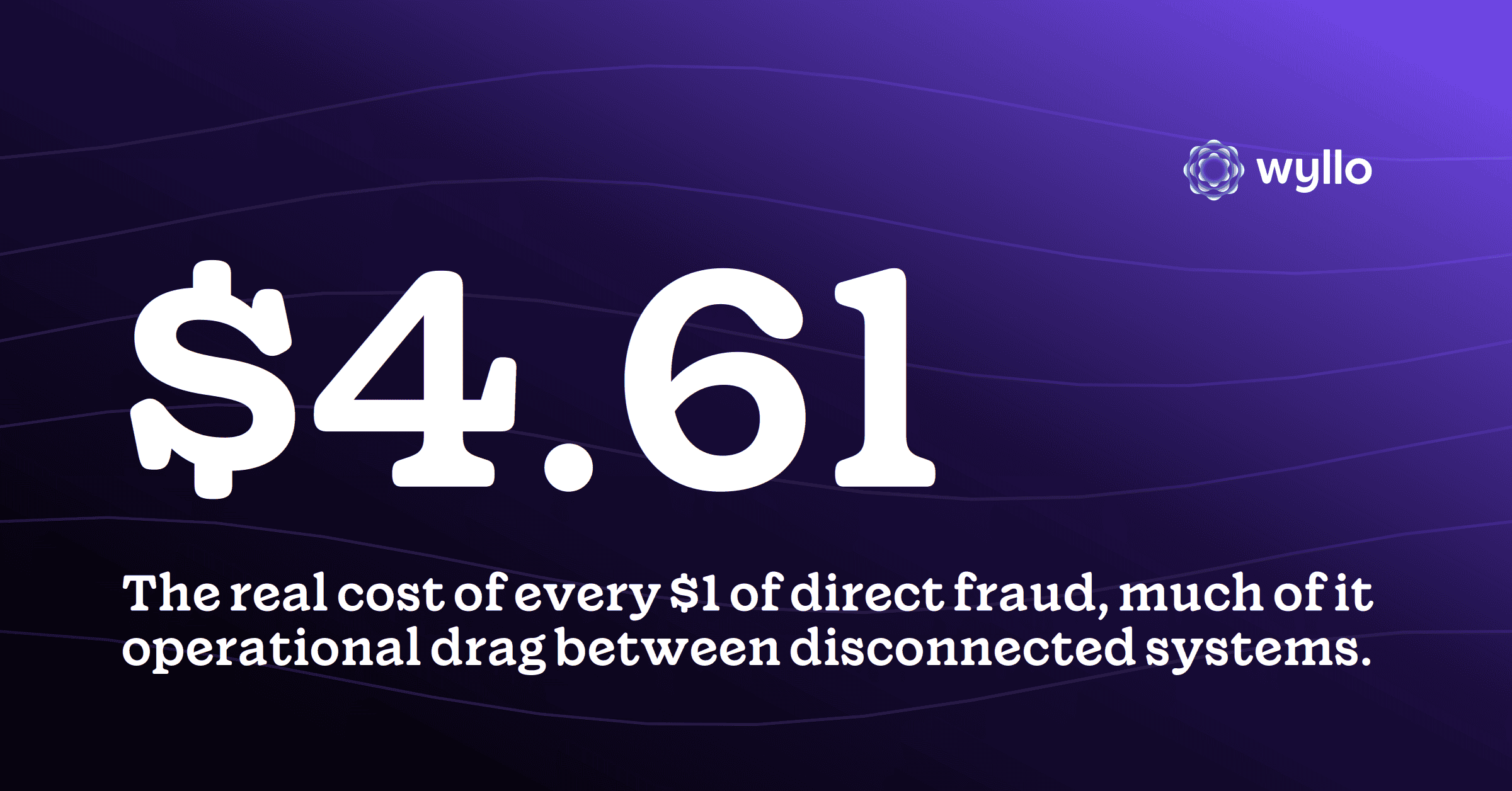
LexisNexis Risk Solutions’ 2025 True Cost of Fraud study puts the total cost at $4.61 for every $1 of fraud lost by US retail and ecommerce merchants, up from $3.00 in the prior year’s study. On the marketing side, Juniper Research put ad fraud at roughly $84 billion in 2023, about 22% of all online ad spend. Reported US consumer fraud losses reached about $16 billion in 2025 per the FTC, the highest on record and about 25% higher than 2024.
What is agentic commerce fraud?
Agentic commerce fraud targets or impersonates AI shopping agents that buy on a consumer’s behalf. The main patterns are counterfeit storefronts engineered to deceive agents into paying with stored credentials, malicious conversational agents that impersonate brands and delay victims from reporting, and criminal infrastructure generated at machine speed. Visa reported a 25% rise in malicious bot-initiated transactions over six months, with a 40% rise in the US.
How should merchants prepare for AI shopping agents?
Treat agent-initiated orders as a distinct risk segment rather than forcing them through rules built for human sessions. Adopt agent verification standards so you can confirm which agent is transacting and on whose behalf. Capture the consent record that links the shopper to the agent, because disputes will turn on authorization rather than on the purchase itself. And keep monitoring for copycat storefronts, since agent-targeted fake stores harm your customers without ever touching your checkout.
Why is policy abuse rising faster than payment fraud?
Three structural reasons. Returns and refund processes became more generous during the pandemic and didn’t fully tighten. Generative AI lowered the cost of fabricating claim evidence (altered photos, AI-written angry emails). And the playbooks are now openly shared on social platforms. Mastercard’s State of Chargebacks 2025 found friendly fraud now accounts for more than 45% of all chargebacks.
What’s the difference between basic and advanced fraud prevention?
Basic tools are typically rules-based, scoring transactions against fixed thresholds. Advanced tools layer in AI that correlates signals across the customer journey, adapt to new patterns continuously, integrate human expert review on borderline cases, and embed decisioning inside existing workflows. The practical difference shows up in two numbers a merchant already tracks: approval rate and false decline rate. Rules-based systems trade one against the other. Journey-level models improve both at once.
How can merchants prevent fraud without hurting good customers?
Differentiate based on trust and risk signals rather than blanket rules. Lighter checks for shoppers with clean history. Tighter for unfamiliar context. Pair AI screening with human expert review on borderline orders. Monitor signals across the full journey (checkout, returns, claims, account behavior, support) rather than just transactions. A connected risk intelligence layer is what separates fraud programs that protect customer experience from those that quietly degrade it.
What chargeback ratio gets a merchant into trouble?
Both Visa and Mastercard apply network-level monitoring. Visa’s Acquirer Monitoring Program (VAMP) sets the merchant Excessive threshold at a 1.5% combined fraud-and-dispute ratio, tightened from 2.2% in April 2026, with $8 fees per fraud or dispute once exceeded. Mastercard’s Excessive Chargeback Merchant program triggers at 1.5%–2.99% chargeback-to-transaction ratio with at least 100 monthly chargebacks.
Bringing It Together
Ecommerce fraud in 2026 is more coordinated, more polished, and more expensive than the version most fraud tools were built for. The patterns shifted from the transaction to the journey: returns, claims, account behavior, support channels, post-purchase abuse. Now they are shifting again, toward a buyer who may not be a person at all. Defenses built around transaction-level scoring quietly stopped keeping up.
The merchants who handle the rest of this decade well are the ones who treat risk intelligence as a strategic capability rather than a checkbox at checkout.
Curious how an intent-aware risk intelligence approach would change what your defenses actually catch? Explore the Wyllo platform, or start with Wyllo Payment Fraud Protection for the AI-plus-human-experts model that catches what rules-based systems miss.