Last updated May 18, 2026 with current PYMNTS and Zendesk data on the customer experience cost of false declines, and a trust-led approach to reducing them.
Ecommerce keeps growing, and so does the cost of getting fraud screening wrong. Recent research is unambiguous: false declines now pose a bigger threat to merchant economics than fraud itself. Erroneous rejections don’t just lose a single sale; they damage customer trust, reduce repeat-purchase rates, and slowly bleed lifetime value out of the customer base.
PYMNTS data shows 47% of retailers now believe false declines have a highly negative impact on customer satisfaction. Even more striking: in 2024, 56% of US consumers reported experiencing a false payment decline within the previous three months, and 32% said they wouldn’t return to a merchant after the experience. The customer never tells you they were wrongly declined. They just quietly buy somewhere else.
Addressing false declines is essential for maintaining customer trust and optimizing revenue. The good news is that the playbook for fixing them is well-understood, and the gap between merchants who’ve solved it and those still over-blocking has widened sharply in the last two years.
What Are False Declines?
To understand false declines, you have to understand what happens behind the scenes when an order is placed online.
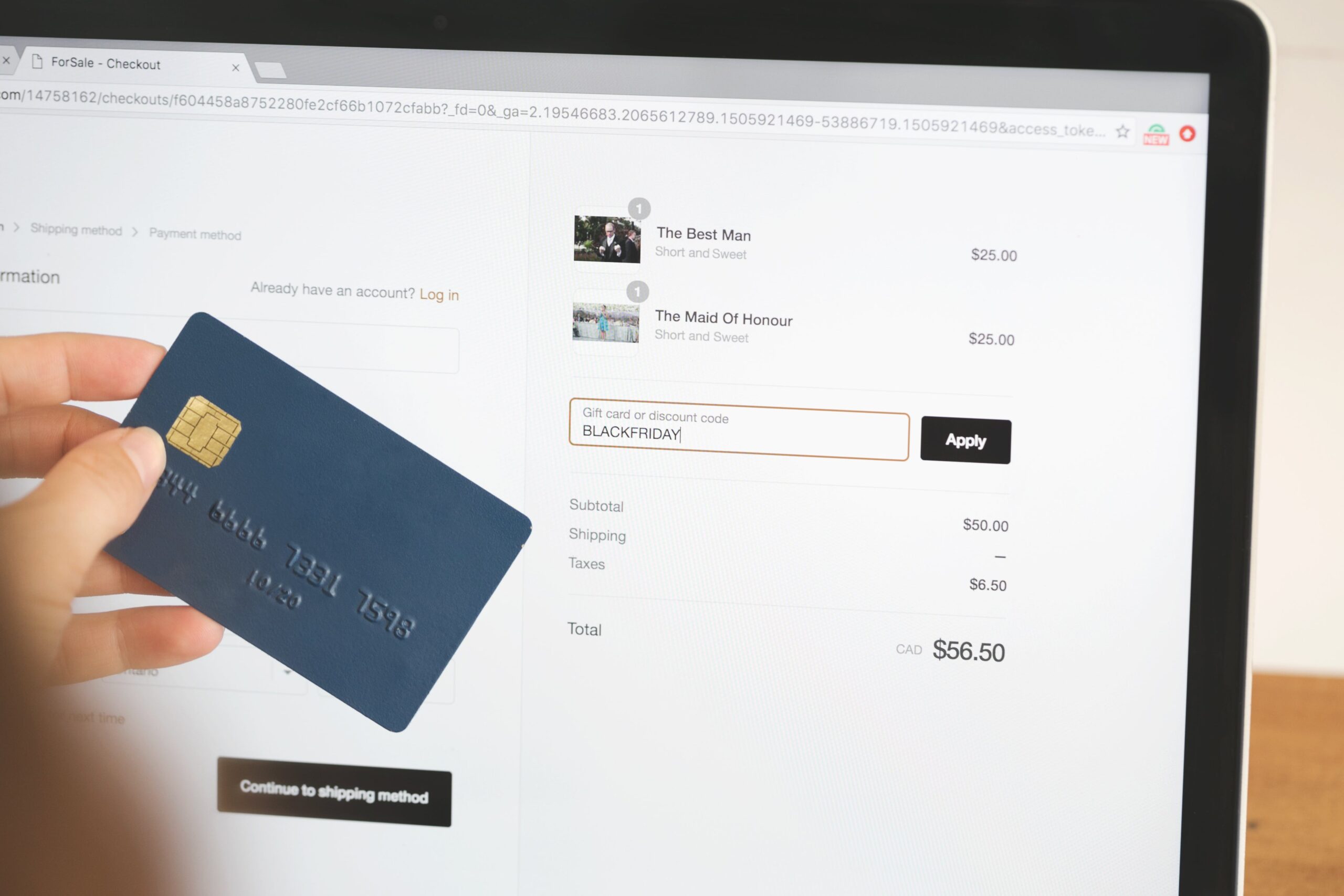
Every online transaction passes through payment gateways and fraud filters configured by the merchant, their processor, and their fraud platform. These filters look for patterns that might indicate fraud and block the transaction if certain thresholds are exceeded. The order never makes it through; the customer sees a generic “declined” message.
When a filter correctly flags a fraudulent order, that’s the system working. When a filter incorrectly flags a legitimate order from a real customer, that’s a false decline (also called a false positive). The merchant loses the sale, the customer loses trust, and neither side gets a clear explanation of what happened.
False declines aren’t usually accounted for in fraud-loss calculations because they’re hard to quantify — the order never completed, so the lost revenue doesn’t appear on a chargeback report. Industry research has consistently shown that the majority of “fraud declined” transactions on rules-based systems are actually legitimate orders from real customers. The cost is real even though it doesn’t show up in the usual fraud math.
How False Declines Happen
Most false declines come from one of two structural problems: fraud filters using single-data-point logic that doesn’t fit the customer’s actual situation, or fraud teams operating under incentives that reward over-caution.
Common reasons orders get falsely declined:
- The shopper’s location is different from previous purchases (vacation, business trip, gift purchase)
- The delivery address differs from the billing address (gift, shipping to office, parents’ address)
- The customer requests fast shipping (urgent need, not fraud)
- Order data contains inconsistencies that aren’t actually risky (zip-code formatting, autocomplete artifacts)
- The order is larger than the customer’s average (annual gift purchase, special occasion)
- Multiple shipping addresses on the same account (legitimate gift recipient list)
- Multiple orders across cards (using a new card, a corporate card, etc.)
- Missing optional card information
The structural problem: rules-based fraud filters apply a single threshold to every customer. The same threshold that catches genuine fraudsters also catches the loyal customer placing their first international order, the gift-giver shipping to a relative, and the executive paying with a corporate card from a hotel WiFi network. Companies over-relying on automation are also missing the diverse data sources that paint a more complete risk picture for each transaction.
The Cost of False Declines
The immediate cost is the lost order. The bigger cost is what happens next.
Unhappy Customers
Look at a false decline through the buyer’s lens. They spent time researching the product, comparing alternatives, reading reviews, and choosing a trusted retailer. Then the purchase gets blocked at checkout with no explanation. That experience is unsettling, embarrassing, and aggravating.
PYMNTS’ 2024 research found 56% of US consumers had experienced a false payment decline within the previous 90 days. Among those affected, 32% said they wouldn’t return to that merchant. The math for any single store is brutal: every false decline isn’t just a lost transaction; it’s a lost customer.
Less Revenue Generated
US ecommerce firms were projected to lose $157 billion to false declines in 2023, with $81 billion permanently lost despite recovery efforts. Despite the scale of the loss, only 33% of online retailers had implemented screening solutions to identify fraud as the cause of failed payments at the time of that research. That’s a significant amount of recoverable revenue sitting on the table.
Damaged Reputation
Zendesk’s Customer Experience Trends Report 2025 found more than half of consumers will switch to a competitor after a single bad experience, and 73% will switch after multiple bad experiences. The bad experiences spread fast: social media, reviews, forums, word-of-mouth. A false decline is exactly the kind of public-facing failure that ends up in a review nobody else writes about because nobody else has the same problem.
How to Reduce False Declines
Three structural changes consistently move the needle for merchants who’ve been bleeding revenue to over-aggressive fraud filters.
1. Stop Relying on Gateway Filters Alone
Simple rules (auto-declining on AVS mismatch, blocking high-velocity orders, declining anything over a dollar threshold) are not a smart way to manage fraud at scale. Across Wyllo’s merchant base, roughly 90% of transactions with an AVS mismatch are legitimate orders from real customers. If your fraud strategy relies only on gateway filters, you’re almost certainly over-blocking by a significant margin.
The fix is layered decisioning: AI-driven screening that correlates signals across the customer journey, paired with merchant-specific tuning that knows the difference between a suspicious AVS mismatch and a normal one for your business.
2. Don’t Make Customer Service Your Fraud Team
In organizations where customer service representatives manage the bulk of fraud screening, false-decline rates tend to be higher than expected. Two reasons.
First, CSRs are measured on customer satisfaction, not on revenue or order approval rates. Their incentive is to avoid the false negative (a chargeback the team will trace back to them) by erring on the side of declining. The system rewards over-caution.
Second, CSRs typically lack the broader signal set, behavioral data, and pattern recognition that a dedicated fraud platform brings. Without those tools, the safer call is always “decline.”
If chargeback responsibility traces back to whichever CSR approved the bad order, but no metric tracks the cost of declined legitimate orders, the incentive structure is doing the opposite of what merchants actually want.
3. Choose the Right Partner
Full-service fraud prevention platforms consistently produce higher approval rates than gateway filters or in-house teams alone. The reason is signal: dedicated fraud platforms leverage diverse data sources, large merchant networks, behavioral analytics, and pattern recognition that no individual merchant can build on their own. This translates to far more accurate decisions than simple rules-based filters can produce.
Wyllo Payment Fraud Protection is built around exactly this model. The platform pairs AI-driven decisioning with human fraud experts who handle the orders where context matters most. Roughly 99.5% of transactions are decided automatically through machine learning; the remaining “grey area” orders get escalated to seasoned fraud analysts for proactive human review. The combination is why merchants who switch typically cut their order declines in half.
How Wyllo Helps
The thread running through the false-decline problem is the same thread that runs through most modern fraud problems: connected signal beats single-data-point rules, AI plus human expertise beats either layer alone, and merchant-specific tuning beats generic thresholds.
Wyllo, the CX-first risk intelligence platform, was built around this premise. Three products do the most work on the false-decline problem:
- Wyllo Payment Fraud Protection pairs AI-driven decisioning with human fraud experts who review borderline orders. Higher approval rates on real customers, stronger catch rates on actual fraud. Optional chargeback guarantee converts residual risk into a predictable line item.
- Wyllo Claim and Policy Abuse Prevention catches the journey-level patterns that traditional payment-fraud tools miss, so the cost of over-blocking transactions to compensate for missed post-purchase abuse goes down.
- Wyllo Chargeback Management turns dispute response into an AI-driven workflow, reducing the incentive to over-block at checkout to avoid manual chargeback work later.
Precision over paranoia. Less reaction. More reason. Designed to think ahead so trusted customers stay frictionless and abuse patterns get the response they deserve.
Frequently Asked Questions
What is a false decline?
A false decline (also called a false positive) is a legitimate customer transaction that gets blocked by a fraud detection system that incorrectly flags it as suspicious. The merchant loses the sale, the customer typically loses trust, and the lost lifetime value rarely shows up in the standard fraud-loss math.
How common are false declines in ecommerce?
Very common. PYMNTS 2024 research found 56% of US consumers experienced a false payment decline within the previous three months. Industry research on rules-based legacy fraud systems puts false-positive rates at 10–20%, dropping to under 2% with modern AI plus human expert review.
How much do false declines cost merchants?
US ecommerce was projected to lose $157 billion to false declines in 2023, with $81 billion permanently lost despite recovery efforts. For any individual merchant, the cost compounds beyond the immediate lost order: 32% of falsely declined consumers say they won’t return to that merchant, and Zendesk research shows more than half of consumers switch to a competitor after a single bad experience.
Why do false declines happen?
Most are caused by one of two structural problems. Rules-based fraud filters apply a single threshold to every transaction, catching legitimate-but-unusual orders alongside real fraud. And customer-service-led fraud review tends to err toward over-declining because CSRs are measured on customer satisfaction, not on approval rates, and lack the broader signal set that dedicated fraud platforms bring.
How can I reduce false declines without inviting more fraud?
Move from single-data-point rules to connected decisioning across the customer journey. Pair AI-driven screening with human expert review on borderline orders, so the cases where context matters most get human judgment instead of a default decline. Tune to your specific business patterns rather than relying on generic thresholds. Wyllo’s AI plus human expert review model is built specifically for this trade-off.
Are false declines really worse than fraud?
Often yes, especially for merchants past a certain volume. A chargeback shows up in a report. A false decline shows up as a customer who never came back, and the unit economics on customer lifetime value usually mean the falsely declined order cost more than the prevented fraud would have. The brands seeing the strongest unit economics are the ones who solve for both at once.
Bringing It Together
False declines are not a minor inconvenience. They’re a meaningful cost line that most merchants underestimate, and the cost compounds as customers walk away quietly. The brands that solve the problem treat fraud prevention as a customer experience function, not just a loss-prevention function, and pair AI-driven decisioning with human expertise on the orders where context matters most.
Curious how a CX-first risk intelligence approach would change your false-decline rate? Start with Wyllo Payment Fraud Protection for the AI plus human experts model, or explore the broader Wyllo platform for connected intelligence across the full customer journey.