Last updated May 15, 2026 with current MRC fraud-report findings, refreshed AI detection-accuracy research, and a trust-led answer to the question every CX and risk leader is being asked at budget time.
It’s a fair question. Fraud detection is one of the larger line items in any growing ecommerce operation, and the conversation in the last two years has shifted from “do we need this?” to “is what we have actually working, and is the next investment worth it?”
The current research answers the question more clearly than it did a few years ago. Three findings worth sitting with:
- Fraud rates are coming down where tools are deployed and tuned. The Merchant Risk Council’s 2026 Global eCommerce Payments and Fraud Report found average fraud rates by order dropped from 3.4% to 3.0% in 2025, and merchants experienced an average of 3.7 distinct fraud attack types last year, down from 4.2 the year before.
- AI-driven systems materially outperform rules-based legacy systems. Industry research puts modern AI fraud detection accuracy at roughly 90–97% versus 60–75% for rules-based legacy systems, with false-positive rates dropping from 10–20% under rules to under 2% with AI, and top-tier systems running well below 1%.
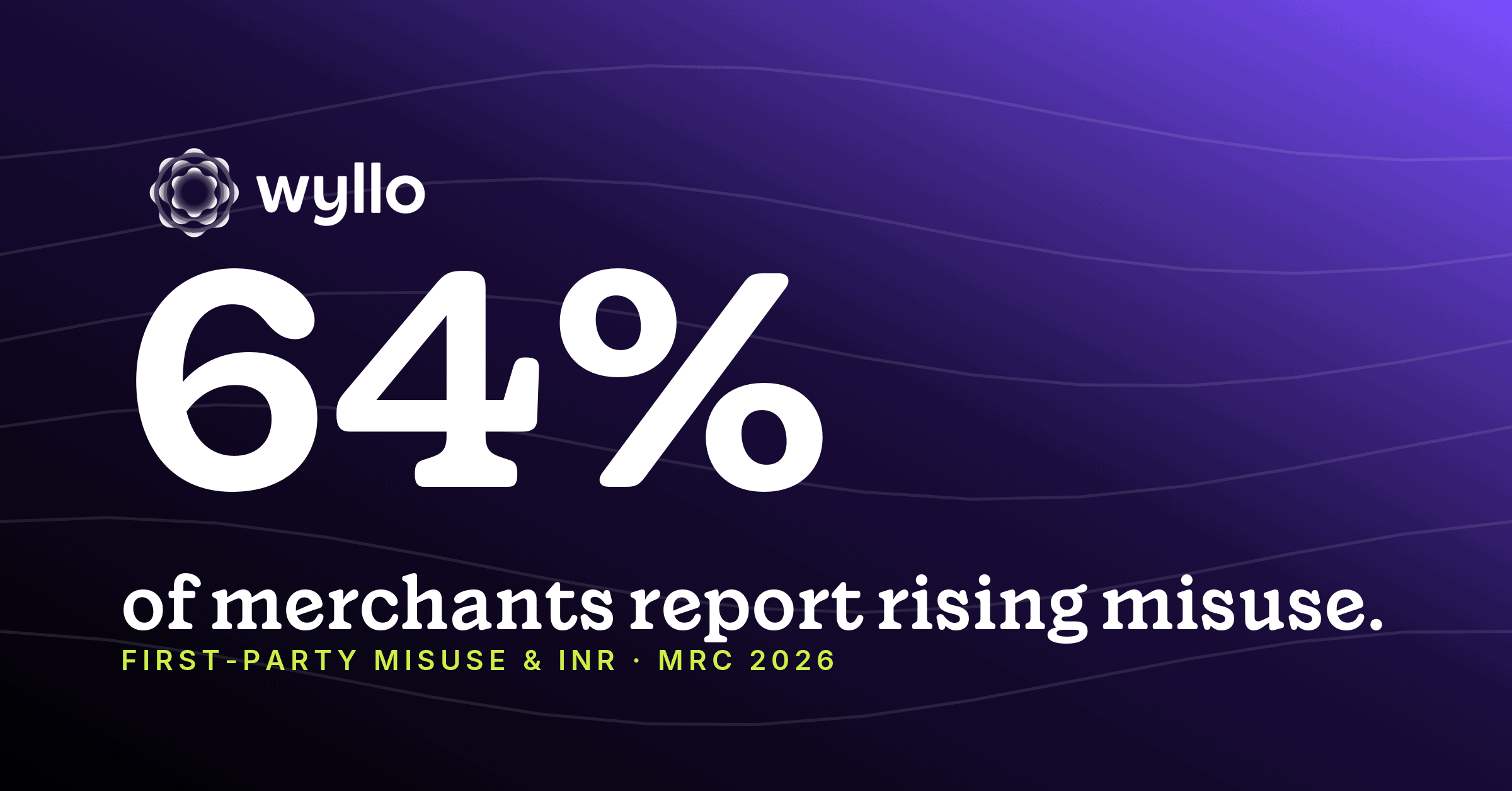
- The patterns are shifting upstream and post-purchase. The MRC report names refund and policy abuse the #1 fraud threat across ecommerce; 64% of merchants now report rising first-party misuse, and more than one in four are seeing it grow by 25% or more.
The honest takeaway: advanced fraud detection tools do work, but they’re not interchangeable, and the gap between basic and advanced has widened. Below is a closer look at what the data shows and what separates the brands seeing real results from those still doing fraud math in spreadsheets.
What the MRC Data Actually Says about Advanced Fraud Detection Tools
The MRC’s annual survey covers over 1,100 merchants across more than 35 countries, which makes it one of the most useful industry benchmarks available. The 2026 report (covering 2025 activity) shows a few directional shifts:
- Fraud rates by order fell. Down from 3.4% to 3.0%. Not a dramatic drop, but a real one in a year where most economic indicators were trending the wrong direction.
- Fewer simultaneous attack types per merchant. 3.7 in 2025 versus 4.2 in 2024. Merchants are seeing slightly more concentrated, more sophisticated attack patterns rather than the wider spread of opportunistic activity that defined the prior years.
- Refund and policy abuse is now the dominant fraud category. 57% of merchants saw more refund and policy abuse in 2024, and the trend has continued. This is the structural shift: prevention work is moving from transaction-level decisioning to journey-level decisioning.
- First-party misuse is climbing fast. Customers disputing legitimate purchases or exploiting return policies. 64% of merchants report it’s rising, and a quarter of merchants are seeing increases of 25% or more.
What the data tells you, when you stack it: merchants who invested early and deeply in modern fraud detection are catching more, blocking less of the legitimate traffic, and seeing genuine cost discipline. Merchants still operating off static rules are watching their fraud rates climb while their approval rates fall.
Where AI Makes the Biggest Difference
The accuracy improvement isn’t marginal. Mastercard’s generative AI work on compromised cards doubled detection rates and cut false declines by up to 200%. HSBC reported a 60% reduction in false positives after deploying AI-driven dynamic risk assessment. These aren’t pilot-program numbers; they’re the difference between a system that can handle modern fraud and one that can’t.
Where AI specifically pays back:
- Pattern recognition across signals. Rules engines look at one transaction at a time. Modern AI systems can correlate behavior across device fingerprints, order history, account behavior, network signals, and post-purchase actions to surface patterns invisible at the transaction level.
- Adaptive decisioning. A rules engine that worked twelve months ago is usually quietly out of date today. Models retrained continuously on fresh data stay current as fraud tactics shift.
- Lower friction on legitimate orders. This is the underappreciated part. The cost of declining a good customer is often higher than the cost of letting a marginal-fraud order through, and AI systems with merchant-specific tuning approve significantly more borderline-but-legitimate orders than rules-based legacy systems.
- Better human-in-the-loop economics. The orders that genuinely require human review are surfaced more accurately, so expensive analyst time goes to the cases where context matters most rather than to high-volume routine clearing.
A useful frame: the question isn’t “does AI work?” The question is “does the AI know your business well enough to apply the right judgment to your specific patterns?” That’s where merchant-specific context and connected signals across the customer journey become the differentiators.
Where Tools Alone Are Not Enough
Two categories of risk remain hard to solve with technology alone, and both are growing.
Phishing and social engineering. These exploit human trust more than they exploit technical weaknesses, and they continue to rise. APWG data shows phishing volume measured in the millions of attacks per quarter, and the FBI’s IC3 2024 report names phishing the single most reported cybercrime type, with reported losses up 274% year over year. Technology helps, but customer education, multi-factor authentication, and process discipline are equally important controls.
Reshipping schemes. Fraudsters convince third parties (often through romance or fake-employment scams) to receive packages and forward them to the actual fraudster. The shipping looks legitimate to a transaction-level system because the address matches a real person with a real account. Catching reshipping requires journey-level signal: noticing that a “good” account’s shipping behavior just changed in a way that doesn’t fit its history.
Both patterns reinforce the same point: tools matter, but the brands seeing the strongest results combine tools with connected signal across the full customer journey and process discipline on the operational side.
What “Advanced” Actually Means
The word “advanced” gets used loosely. A useful checklist for distinguishing real capability from marketing copy:
- Real-time decisioning, not batch scoring. Decisions made in the moment, not after the fulfillment system has already started packing the box.
- AI plus human experts. Pure-AI systems tend to over-decline borderline orders. Pure-human review doesn’t scale. The strongest systems pair AI screening with expert analysts who review the orders where context matters most.
- Merchant-specific tuning. A generic risk score trained on a competitor’s data isn’t going to make the right decisions on your business. Look for systems that adapt to your specific patterns, payment mix, customer base, and abuse history.
- Embedded in the workflows your team uses. Risk scores and recommended actions delivered inside the tools your CX, ops, and risk teams already work in. Another dashboard nobody checks isn’t a tool; it’s a Slack notification.
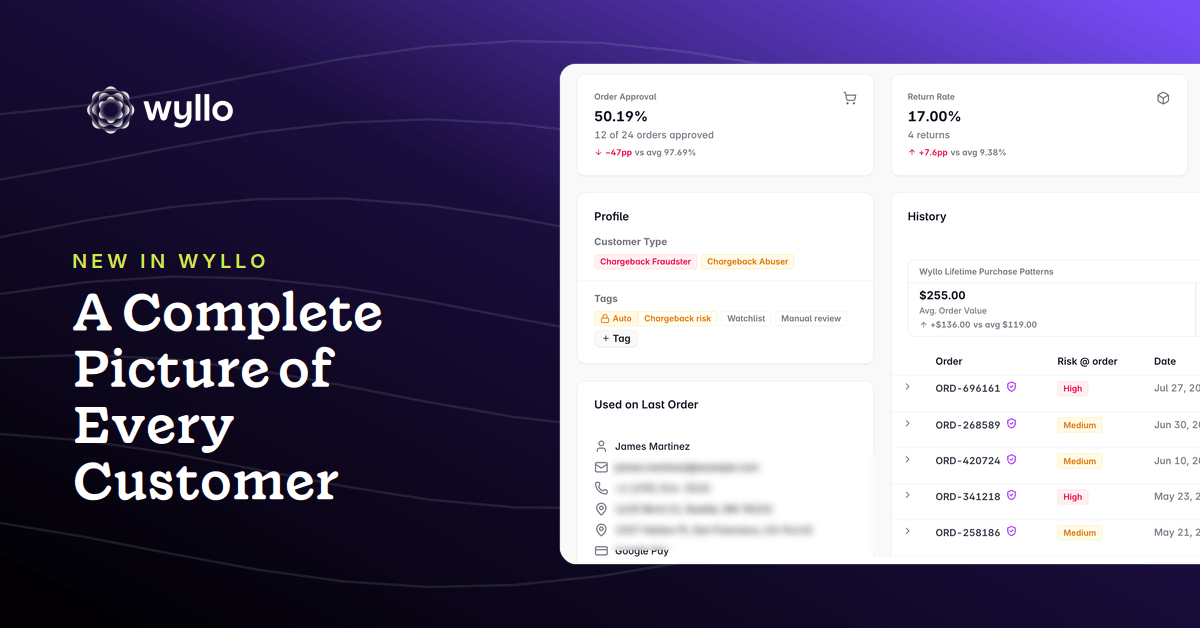
- Connected signals across the journey. Checkout, returns, claims, support, account behavior, and chargebacks viewed together. Pattern recognition across surfaces is what catches the abuse that transaction-level review misses.
- Continuous learning. Models retrained on fresh data, not static rules updated quarterly.
How Wyllo Helps
Wyllo, the CX-first risk intelligence platform, was built around exactly this set of capabilities. Two products do the most work in the fraud-detection-tooling conversation:
- Wyllo Payment Fraud Protection pairs AI-driven decisioning with human fraud experts who handle the orders where merchant-specific context matters most. The result is higher approval rates on legitimate orders without sacrificing fraud catch rates, with an optional chargeback guarantee for merchants who want predictable economics on the residual loss.
- Wyllo Claim and Policy Abuse Prevention catches the journey-level patterns that traditional payment-fraud tools miss: refund abuse, policy exploitation, account takeover, and friendly-fraud chargebacks.
For brands seeing the MRC’s “refund and policy abuse as the #1 threat” finding play out in their own data, that journey-level layer is where the next investment usually pays back fastest.
Precision over paranoia. Less reaction, more reason. Designed to think ahead.
Frequently Asked Questions
Do advanced fraud detection tools actually work?
Yes. The MRC’s 2026 Global eCommerce Payments and Fraud Report shows fraud rates by order dropped from 3.4% to 3.0% in 2025 and merchants face fewer simultaneous attack types than the prior year. Industry research on AI-driven systems shows 90–97% detection accuracy versus 60–75% for rules-based legacy systems, with false-positive rates dropping from 10–20% to under 2%. The data supports the investment.
What is the difference between basic and advanced fraud detection tools?
Basic tools are typically rules-based, scoring transactions against fixed thresholds (velocity, geography, BIN, billing-shipping mismatch, etc.). Advanced tools layer in AI and ML that correlate signals across the full customer journey, adapt to new patterns continuously, integrate human expert review on borderline cases, and embed decisioning inside the workflows your team actually uses. The accuracy gap between the two has widened significantly over the last three years.
How much do AI fraud detection tools reduce false declines?
Modern AI systems typically run false-positive rates under 2%, versus 10–20% for legacy rules-based systems. Mastercard’s generative AI work on compromised cards reduced false declines by up to 200%, and HSBC reported a 60% reduction in false positives after deploying AI dynamic risk assessment. The business impact is significant: false declines often cost more than the fraud they were trying to prevent, since blocked good customers tend not to come back.
Why is refund and policy abuse rising so quickly?
Three structural reasons. Returns processes got more generous during the pandemic and never fully tightened. Generative AI lowered the cost of fabricating claim evidence (altered photos, AI-written angry emails, fake police reports). And the playbooks are now openly shared on social platforms. The MRC’s 2025 report ranked refund and policy abuse the #1 fraud threat across ecommerce, displacing payment fraud at the top of the list for the first time.
What should I look for when evaluating fraud detection tools?
Real-time decisioning, AI plus human expert review (not pure AI alone), merchant-specific tuning to your patterns, embedded delivery inside your existing workflows, connected signals across checkout / returns / claims / support, and continuous model learning. Be skeptical of tools that produce another dashboard nobody checks instead of integrating into the workflows your team already lives in.
Are fraud detection tools worth the investment for a small or mid-market brand?
Often yes, especially as merchants scale through the volume bands where rules-based controls start to break. The economics shift at the point where the loss to fraud and false declines combined outpaces the cost of a modern platform, which usually happens earlier than most brands expect. The MRC data suggests merchants of all sizes are seeing fraud-rate improvements when modern tools are deployed and tuned.
Bringing It Together
Advanced fraud detection tools work. The evidence is now clear enough that the more useful conversation is no longer “should we invest” but “are we investing in the right combination of capabilities for the patterns we’re actually facing?” Real-time AI decisioning paired with human expertise, merchant-specific tuning, journey-level signal connectivity, and embedded workflow delivery are the capabilities that consistently separate the brands seeing measurable results from those still doing fraud math in spreadsheets.
Curious how a CX-first risk intelligence approach would change the math on your fraud line? Start with Wyllo Payment Fraud Protection for the AI-plus-human-experts model, or explore the broader Wyllo platform for connected intelligence across the full customer journey.