A CX leader’s field notes on why the real holiday prep happens a quarter early, and what it takes to walk into Q4 ready instead of reacting, by Breanna Moreno, CX Architect at Wyllo
Ask any CX leader what their busiest quarter is, and they’ll say Q4 without blinking. But if you ask me when the real peak season preparation work happens, I’ll tell you it’s Q3.
So here’s the plain version, the one I’d give a peer over coffee: peak season preparation is the work you do in Q3 to pressure-test your team, your tech, and your cross-functional plans before Q4 volume actually hits. Do it in Q3 and you’re refining. Wait until Q4 and you’re improvising. The stakes keep climbing, too. U.S. shoppers spent a record $257.8 billion online over the 2025 holiday season, up 6.8% year over year, according to Adobe Analytics. That is the wave you are preparing to meet.
Q3 is when I finalize everything. It’s when I stop planning in theory and start pressure-testing in practice. Every year, I treat it as my last real window to get it right before the lights come up, because once Q4 hits, you’re not building anymore. You’re performing.
I call it our Super Bowl. Some days it feels more like a marathon. Either way, it’s the same idea: we train quietly, all year, for a stretch of weeks where everything we’ve built either holds or doesn’t. And when it doesn’t, the backlash almost always lands on us first, even when the fire started somewhere else entirely.
Q3 Is for Finalizing, Not Finishing
By the time Q3 rolls around, your roadmap for the year should already be mostly built. This quarter isn’t for starting new initiatives; it’s for making sure the ones you already have are actually going to hold up under volume.
That means testing your tech stack like you mean it, not just confirming it’s live, but confirming it performs under the kind of pressure Q4 will actually throw at it. That doesn’t mean the door closes on new initiatives, though. If a last-minute build or a new activation could genuinely move the needle on peak readiness, roll it out and pressure-test it into performance while you still have room to adjust. The line isn’t “nothing new after Q3”; it’s “nothing new without proof it holds up.” Peak season preparation means being honest with yourself about gaps. If there’s a tool or a partner that could meaningfully reduce risk or add capacity during peak, Q3 is your last real window to activate it and watch how it performs before volume actually hits. Wait until November and you’re not implementing anymore, you’re improvising.
We Train All Year. We Take the Hit First.
Here’s the part of this job that doesn’t get talked about enough: CX rarely causes the chaos of peak season, but we almost always absorb it.
A marketing team sends an email with a broken link. Operations underestimates a SKU’s demand and it sells out mid-campaign. A promotion goes out with vague terms and customers interpret it three different ways. None of that originates in support. All of it lands in our queue within minutes.
We’ve quietly prepared for this all year: building playbooks, training the team, stress-testing systems. And then a decision made in a different department, with good intentions and zero malice, hands us the brunt of the response. That’s not a complaint. It’s just the job. But it’s exactly why Q3 peak season preparation has to include more than our own house.
Get in the Room Before the Campaign Launches, Not After
The single highest-leverage thing a CX leader can do in Q3 is get a seat in the rooms where other departments are planning holiday initiatives, before those initiatives go live.
That means sitting down with Marketing and actually walking through what’s rolling out: the promotions, the emails, the landing pages, the messaging. Not to slow them down, but to ask the questions they may not be positioned to ask themselves. Does this messaging create an expectation we can’t fulfill? Is there a UX or UI moment in this flow that’s going to confuse someone, or worse, break under load? If a customer reads this promotion literally, does it hold up?
This isn’t about creating friction between teams. It’s about making sure the friction shows up in a planning meeting in September instead of in your ticket queue on Black Friday.
Build the Plan for When Something Breaks
No matter how much cross-functional alignment you get, something will go wrong. The site will hiccup during your highest-traffic hour. An email will go out with the wrong code, or the wrong link, or the wrong everything. That’s not a failure of planning; it’s the nature of running a business at peak volume.
What separates a prepared team from a scrambling one is whether you’ve already answered the question before it happens: what do we do when this specific thing breaks? Not a vague “we’ll handle it,” but an actual plan. Who gets notified first. What the holding message says. Whether support gets a heads-up before the fix goes out or finds out from the customer instead. Having that worst-case playbook sitting in a drawer, ready to go, is the difference between a rough hour and a rough week.
Support the People Who Support Everyone Else
All of this only works if the people doing the work have a real voice in how it gets built. Your support team is closest to the customer, which means they see the cracks before anyone else does: the confusing email, the promo code that doesn’t scan right at checkout, the return policy that reads clean in a deck but falls apart in an actual conversation. Q3 is the time to genuinely ask them what they’re seeing, and to build that feedback into your plan instead of just collecting it.
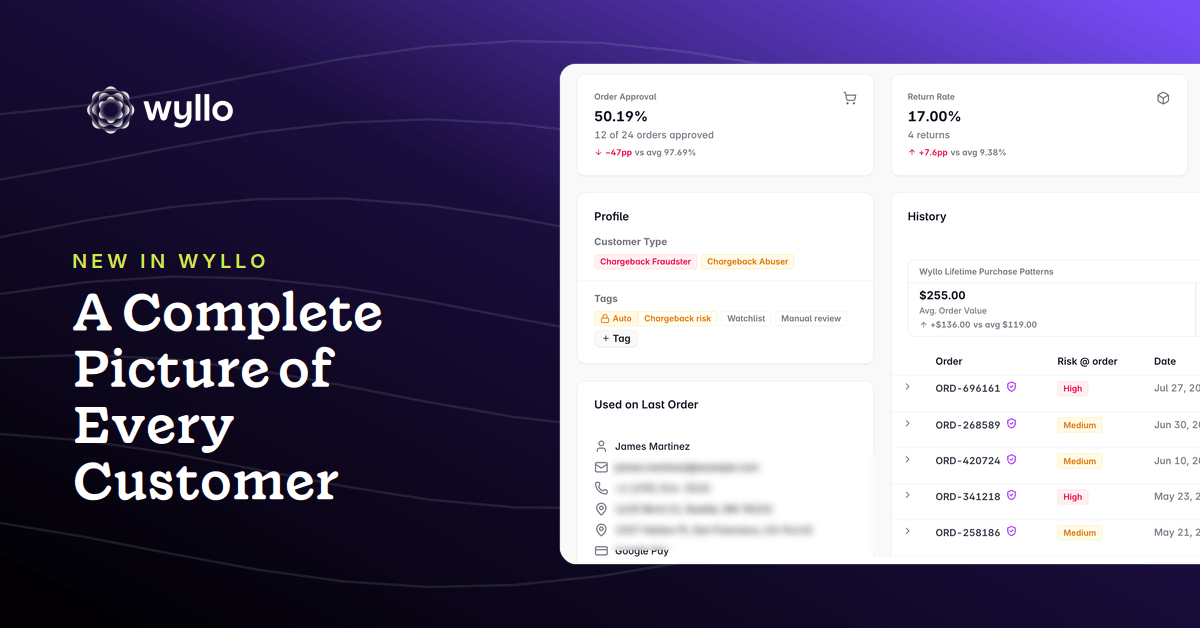
That same care has to extend to giving them better tools, not just a pep talk before Q4. A huge amount of the exhaustion in this job doesn’t come from ticket volume itself; it comes from the time agents lose chasing down whether a claim is even legitimate before they can actually resolve it. Tools like Wyllo’s CX Support exist to take that rabbit-hole work off their plate entirely, surfacing the pattern instantly so your team spends their energy on the customer in front of them instead of playing detective. If you want your team walking into Q4 confident instead of dreading it, elevating their feedback and equipping them with tools that save them time and stress isn’t a nice-to-have. It’s part of the prep.
Frequently Asked Questions
When should peak season preparation start?
Earlier than most teams think. The heavy lifting belongs in Q3. By the time you reach October, you want your roadmap built and your job to be finalizing and pressure-testing, not starting from scratch. Q3 is the last real window to activate a new tool or partner and watch how it performs before Q4 volume hits.
Why is Q3 the most important quarter for peak season prep?
Because Q4 is when you perform, not when you build. Q3 is when you can still test your tech stack under realistic load, close cross-functional gaps with Marketing and Operations, and write the contingency plans you hope you never open. Fix a problem in a September planning meeting and it never reaches your Black Friday ticket queue.
How can CX teams reduce peak season fraud and abuse without adding friction for good customers?
Give agents pattern-level visibility so they aren’t investigating every claim by hand. When a support team can see a customer’s history across returns, claims, and the broader network, they can resolve honest issues fast and reserve friction for the behavior that actually warrants it. That is the idea behind the Wyllo platform: intent-aware decisioning that helps your team tell real problems from manufactured ones in the moment.
What should a peak season contingency plan include?
At minimum: who gets notified first when something breaks, what the customer-facing holding message says, and whether support hears about a fix before or after customers do. The goal is a worst-case playbook that already exists on the shelf, so a bad hour never becomes a bad week.
The Takeaway
Peak season doesn’t test your support team in isolation. It tests how well your entire organization prepared, together. Q3 is your chance to make sure the answer to “were we ready” doesn’t rest on your shoulders alone.
We spend all year training quietly for this. The least the rest of the org can do is let us into the room before the whistle blows.