A Practical List for Ecommerce Managers and Fraud Leaders Who Own Both Numbers
Ask how to reduce chargeback rate and most of the advice you will find reduces to one move: decline more orders. It works, in the way that closing the store works. The dispute number goes down and the revenue goes with it. PYMNTS research from March 2026 found nearly half of merchants estimate up to 5% of their legitimate orders are wrongly declined as fraud, an industrywide loss estimated at $50 billion. In the same research, 85% of merchants named the real problem: preventing fraud without degrading the customer experience.
The better answer is a program, not a dial. Reducing your chargeback rate without creating false declines means three things working together: fewer bad transactions entering the system, more disputes resolved before they become chargebacks, and a scoreboard that grades approvals and disputes as one number instead of two rival ones.
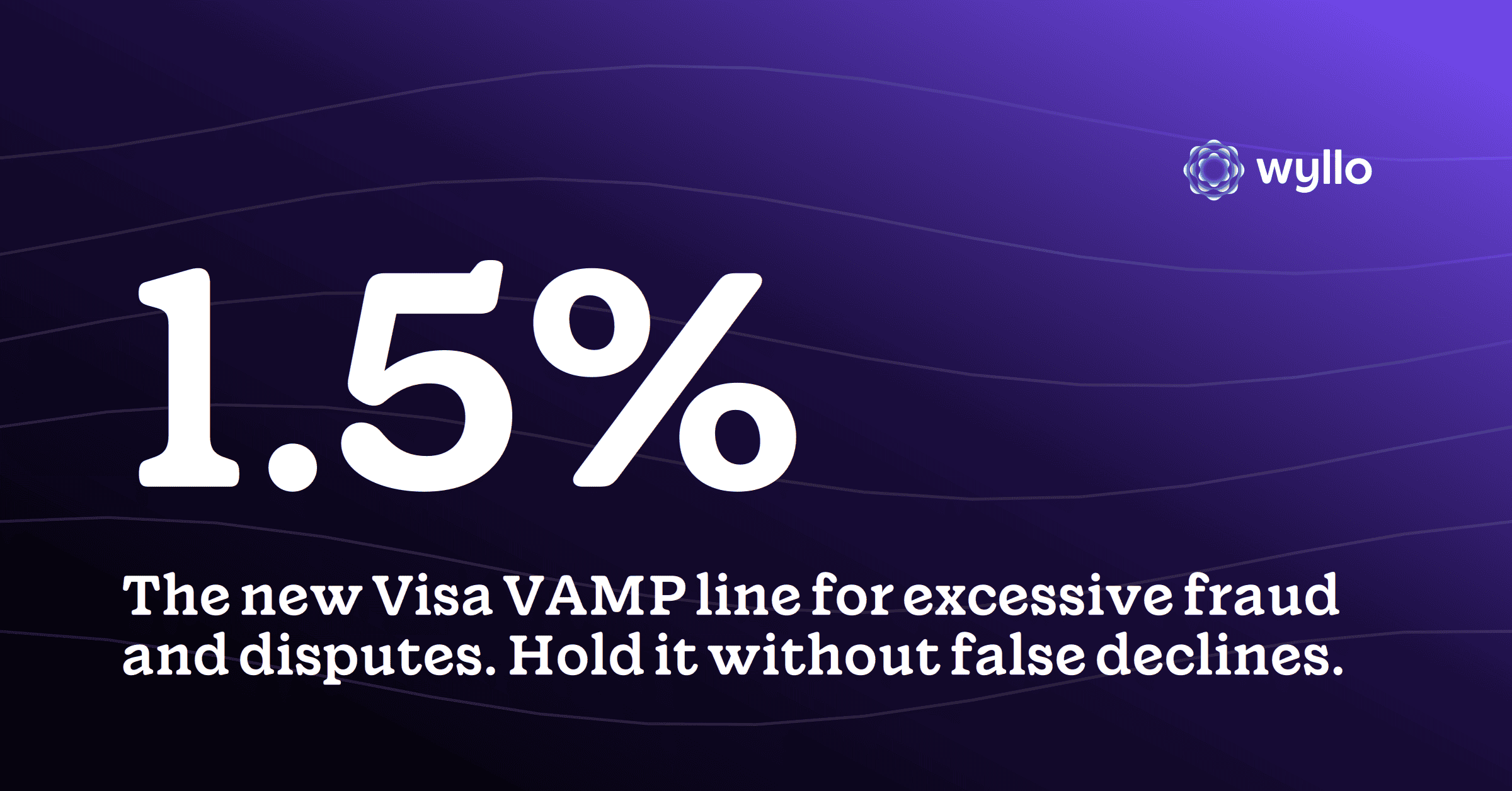
The stakes rose this year. Mastercard projects global chargeback volume will reach 337 million in 2026, a 42% climb from 2023, and Visa lowered its excessive merchant threshold to 1.5% in April 2026 under the Visa Acquirer Monitoring Program (VAMP). The margin for a sloppy dispute program got thinner. So did the margin for buying a clean ratio with blocked revenue. Here are seven ways to hold both lines.
1. Know the Chargeback Ratio Math Before You Change Anything
You cannot manage a number you calculate wrong. Under VAMP, Visa’s consolidated monitoring program, the ratio that matters is the count of fraud reports (TC40) plus disputes (TC15), divided by settled card-not-present transactions. Merchants at or above 1.5% in the US, Canada, EU, and AP regions, with at least 1,500 monthly fraud and dispute counts, are identified as excessive.
Two details in that math are strategy, not trivia. Disputes resolved through pre-dispute solutions are excluded from the ratio, and so is fraud that qualifies under Compelling Evidence 3.0. That means tips 3 and 6 on this list do not just soften the blow of a dispute; they remove it from the count entirely. Start by monitoring your ratio at the merchant ID level, including TC40 reports that never become chargebacks, so you see trouble while it is still a trend and not a letter from your acquirer.
2. Replace Blanket Rules with Intent-Aware Screening
Most false declines are manufactured by single-signal rules: block the AVS mismatch, block the fast shipping request, block the order that is bigger than the customer’s average. Each rule catches some fraud and a much larger population of real customers doing normal things like sending gifts or ordering from a hotel.
Intent-aware screening asks a better question. Instead of “does this transaction trip a threshold,” it asks “does this behavior look like a customer or an exploit,” correlating device, behavior, history, and network signals across the journey. The practical test for any screening layer is whether it is graded on approval rate and fraud rate together. A vendor or an internal team that reports only the fraud number drifts toward over-blocking, because nobody is charged for the good orders that never happened.
3. Enroll in the Pre-Dispute Rails
A dispute intercepted before it becomes a chargeback is the cheapest dispute you will ever handle. The network rails exist for exactly this: alerts through Ethoca and Verifi let you refund or resolve a complaint while it is still a complaint, Order Insight answers cardholder confusion with transaction detail at the moment they call their bank, and Rapid Dispute Resolution auto-refunds eligible low-value cases by rules you define.
Because resolved pre-dispute cases are excluded from the VAMP ratio, this is the fastest structural way to bring a rising ratio down without touching your approval logic at all. The discipline is in the configuration: auto-refunding indiscriminately trains abusers, so set rules that resolve cheap, likely-to-lose cases and route the rest to evidence.
4. Fix the Service Triggers That Masquerade as Fraud
A meaningful share of chargebacks begin as service failures wearing a dispute costume. A billing descriptor the customer does not recognize, a refund that takes eleven days, a support ticket that never got answered, a delivery with no tracking communication. The cardholder is not committing fraud; they are using the bank because the bank answers.
The fix is unglamorous root-cause work. Make descriptors match the brand the customer bought from. Publish refund timelines and beat them. Answer support before the issuer does. A monthly root-cause review of dispute reason codes often surfaces the same finding: a chunk of the “fraud problem” is an operations problem with a cheaper fix.
5. Catch First-Party Abuse Before It Reaches the Issuer
The dispute mix has shifted. Mastercard’s State of Chargebacks research found first-party fraud now accounts for more than 45% of all chargebacks, and the Merchant Risk Council’s Global eCommerce Payments and Fraud Report ranks refund and policy abuse as the top fraud threat in ecommerce. The customer who kept the product now outweighs the stolen card.
Transaction screening cannot see this, because the transaction was legitimate. The signal lives post-purchase: refund and claim patterns, serial “item not received” reports, return behavior that only makes sense as a business model. Scoring those behaviors and linking repeat actors across rotating emails and addresses lets you resolve abuse at the policy level, before the customer escalates to their issuer. If you want a sharper eye for which disputes are abuse in disguise, start with the signs a chargeback is actually fraud.
6. Automate Evidence to the Compelling Evidence 3.0 Bar
Compelling Evidence 3.0 lets you defeat certain fraud claims by showing the disputing cardholder has a matching legitimate purchase history, and qualified cases are excluded from your VAMP ratio. But the standard is strict on data matching, which means the evidence has to be captured at order time, not reconstructed at dispute time.
Automate the capture: device identifiers, IP, delivery confirmation, account history, and support contact logs, assembled into representment packages without an analyst rebuilding each case by hand. The second-order benefit is deterrence. Issuers and repeat abusers both learn which merchants fight with evidence and which merchants write it off.
7. Grade the Program on Approvals and Disputes Together
The quiet driver of both chargebacks and false declines is incentive design. If the fraud team is measured only on the dispute ratio, over-blocking is free. If support is measured only on satisfaction, refund-everything is free. Every one-sided metric buys its improvement with someone else’s budget.
Put approval rate, false decline rate, chargeback ratio, and recovery rate on one scorecard, reviewed by one owner. Track the false decline rate with the same rigor as the fraud rate, including declined-order review sampling to measure how much good revenue your rules are rejecting. The merchants who hold both numbers do not treat it as a trade-off to balance; they treat it as one decisioning problem to solve. That is the whole thesis of a chargeback avoidance program built in layers rather than bolted on after the ratio spikes.
How Wyllo Helps
The thread through all seven tactics is connected judgment: decisions that see the whole customer journey instead of one transaction, one ticket, or one dispute at a time. That is what Wyllo, the risk intelligence platform for commerce, is built to do.
- Wyllo Payment Fraud Protection pairs AI-driven decisioning with human fraud experts on borderline orders, so approval rates and fraud rates improve together instead of trading against each other. An optional chargeback guarantee turns residual risk into a predictable line item.
- Wyllo Chargeback Management turns dispute response, evidence assembly, and representment into one workflow, built for the ratio math that now decides network standing.
- Wyllo Claim and Policy Abuse Prevention scores refund, claim, and policy behavior post-purchase and links repeat actors across identities, catching first-party abuse before it becomes a dispute.
- Wyllo Return Fraud and Abuse Prevention applies risk-based return decisions so serial abuse gets friction and good customers keep their easy returns.
Precision over paranoia. The ratio comes down because the decisions got better, not because the door got smaller.
Frequently Asked Questions
What is a good chargeback rate for ecommerce?
Lower than the monitoring thresholds, with room to breathe. Under Visa’s VAMP program, merchants at or above a 1.5% combined fraud-and-dispute ratio (with at least 1,500 monthly counts) are identified as excessive in the US, Canada, EU, and AP regions. Well-run programs hold a comfortable buffer below that line, because the ratio moves with seasonality, attack waves, and issuer behavior you do not control.
How is the VAMP ratio calculated?
Count of fraud reports (TC40) plus count of disputes (TC15), divided by count of settled card-not-present transactions. Disputes resolved through pre-dispute solutions and fraud qualified under Compelling Evidence 3.0 are excluded, which is why alert enrollment and order-time evidence capture directly lower the ratio rather than just softening its consequences.
How do you reduce chargeback rate without declining more orders?
In layers, and the best programs pull them in this order. Pre-dispute alerts and Rapid Dispute Resolution remove disputes from the count without touching approvals. Root-cause fixes to descriptors, refunds, and support remove the service disputes. Post-purchase abuse scoring removes the first-party fraud that transaction screening cannot see. Tightening the approval rules is the last lever, not the first, and it should be pulled with intent-aware screening rather than blanket thresholds.
Do false declines show up in my chargeback numbers?
No, and that is the trap. A false decline never settles, so it never appears in any dispute report. The cost shows up elsewhere: PYMNTS research found nearly half of merchants estimate up to 5% of legitimate orders are wrongly declined, an estimated $50 billion industrywide. Measuring a false decline rate alongside your chargeback ratio is the only way to see whether a “better” dispute number was actually bought with lost revenue.
Bringing It Together
Chargeback reduction and false decline reduction are usually assigned to different teams, measured on different dashboards, and allowed to fight. The seven tactics above are one program: know the ratio math, screen on intent rather than thresholds, intercept disputes on the pre-dispute rails, fix the service triggers, catch first-party abuse post-purchase, automate evidence to the network bar, and grade the whole thing on one scorecard.
The direction of the industry favors merchants who make this move now. Networks are tightening thresholds and rewarding evidence. Dispute volume keeps climbing. And the growth math keeps punishing over-blocking harder than it punishes fraud. The merchants in the strongest position for 2026 are the ones treating disputes and approvals as a single intelligence problem.
Curious how intent-aware decisioning would change your chargeback ratio and your approval rate at the same time? Start with Wyllo Chargeback Management for the dispute side, or explore the broader Wyllo platform for connected intelligence across the full customer journey.