The definitional guide: what a customer risk profile is, what goes into one, and why the unit of analysis is shifting from the order to the customer.
A customer risk profile is a unified record of one customer’s behavior across their entire relationship with a store: orders and approval history, returns and refunds, claims, chargebacks, support interactions, and the identity and payment signals attached to all of it. Where a risk score judges a single transaction at a single moment, a customer risk profile reads the pattern across the relationship, which is where intent actually lives.
That distinction is becoming the defining question in commerce risk. Identity tells you who someone is. Intent tells you what they are about to do, and intent almost never reveals itself in one order. It reveals itself in the fourth return, the third “item not received” claim, the account that spends heavily and refunds most of it back. The Merchant Risk Council’s 2026 Global Payments and Fraud Report found 62% of merchants reporting increases in chargebacks tied to first-party misuse and 57% citing increases in refund and policy abuse. Neither pattern is visible in a single order. Both are obvious in a history.
This guide covers what a customer risk profile includes, why order-level review structurally misses what it catches, and how merchants put one to work.
What Goes Into a Customer Risk Profile
A useful customer risk profile pulls from every surface the customer touches, not just checkout:
- Order and approval history. Every order, its outcome, and the risk score at the time each decision was made. Preserving the point-in-time score matters: it shows why a decision looked correct with the evidence available then.
- Returns and refund behavior. Return rate against category norms, refund requests as a share of orders, and refund-without-return frequency, which is one of the cleanest abuse signals a merchant can track.
- Claims and disputes. “Damaged,” “not as described,” and item not received claims, plus chargeback history, so exposure is a number rather than a hunch.
- Support interactions. Appeasement requests, goodwill credits, and how often a customer escalates, since policy abuse increasingly runs through the support channel rather than checkout.
- Identity and payment signals. Email, phone, address, device, and payment patterns weighed together, including the signals that connect a customer’s behavior across seemingly separate touchpoints.
- Spend and profitability context. Net spend after returns, claims, and appeasements, which is the honest measure of what a customer contributes. Gross revenue flatters exactly the customers a merchant should be examining.
The common thread is that no single system holds all of this. Fraud tools see the transaction, returns platforms see the refund, and the CX tool sees the conversation. A customer risk profile is what happens when those signals share one record.
Why Order-Level Review Misses the Pattern
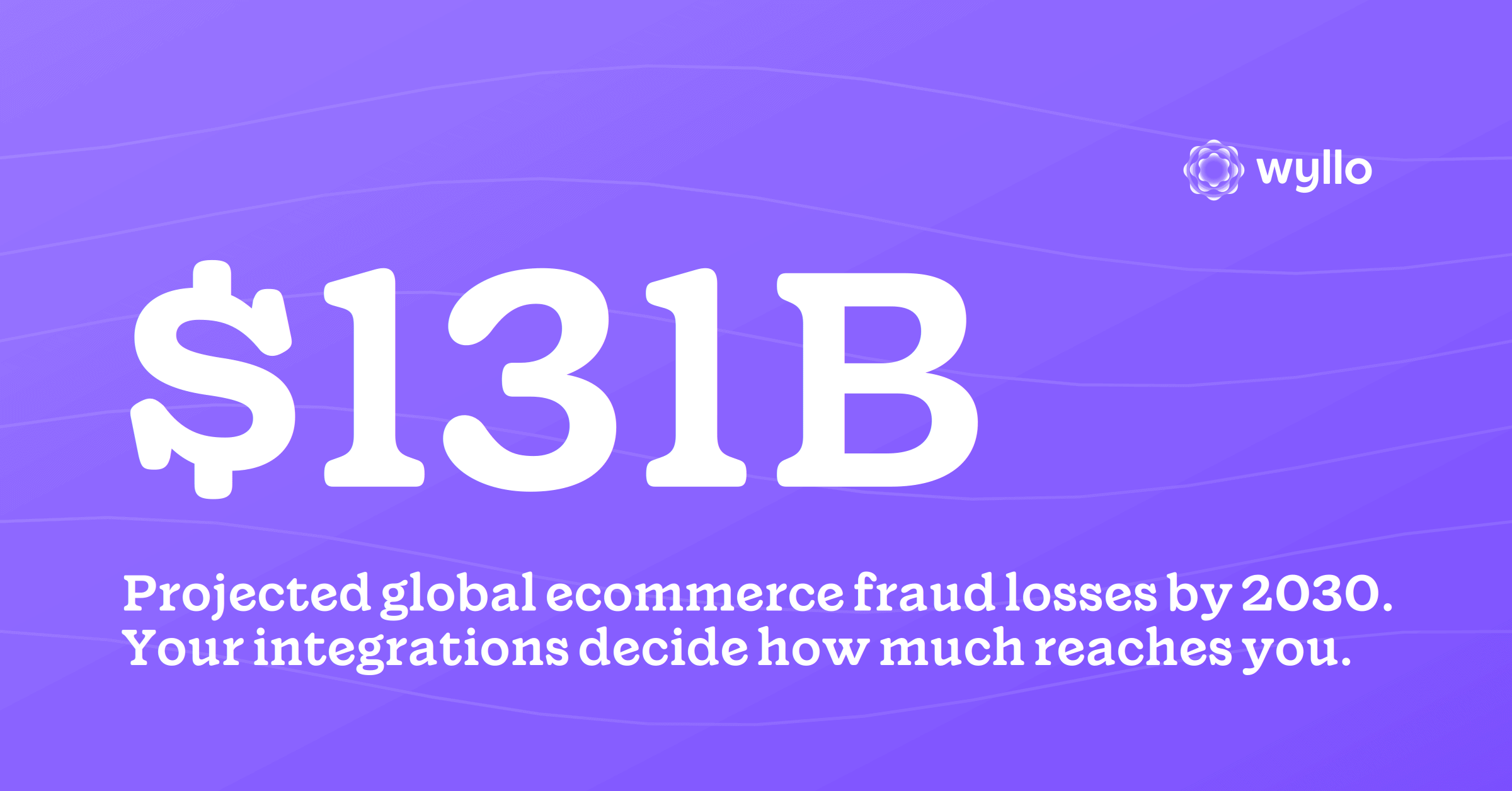
Most fraud review is built around one question: is this order bad? It’s the wrong resolution for the risk that is actually growing. Juniper Research’s ecommerce fraud forecast puts fraudulent ecommerce transactions at $56 billion in 2025, rising toward $131 billion by 2030, and names friendly fraud, legitimate customers disputing valid purchases, as the fastest-growing segment. As their analyst put it, the fastest-growing form of ecommerce fraud is not criminals breaking in; it is bad actors blending in.
Blending in works because each individual event clears the bar. A serial returner’s fifth return looks like anyone’s first. A repeat claimant’s next “missing package” reads as an unlucky delivery. An appeasement farmer’s ticket looks like a service opportunity. Judged one event at a time, every one of these is defensible. Judged as a relationship, none of them are.
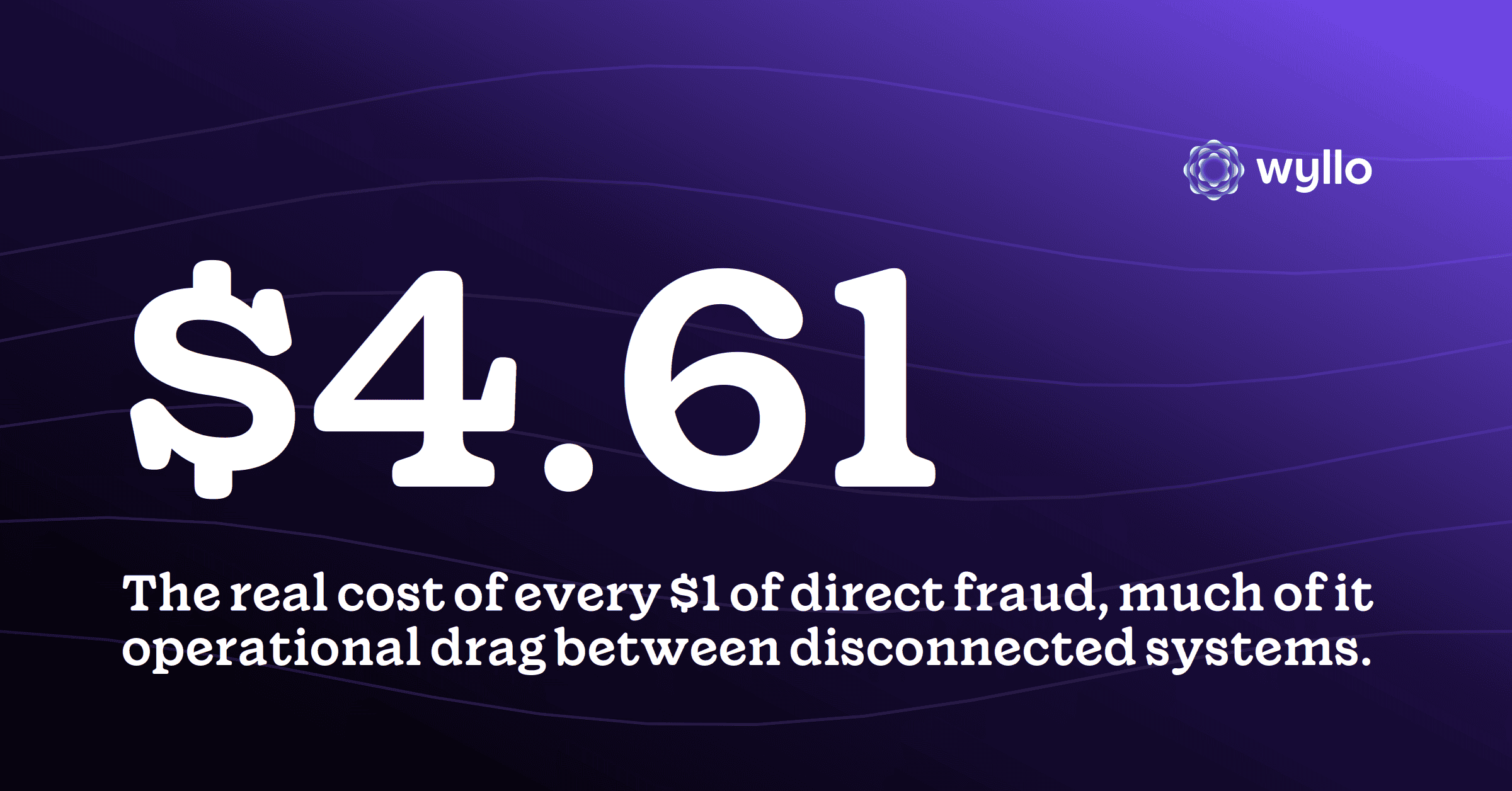
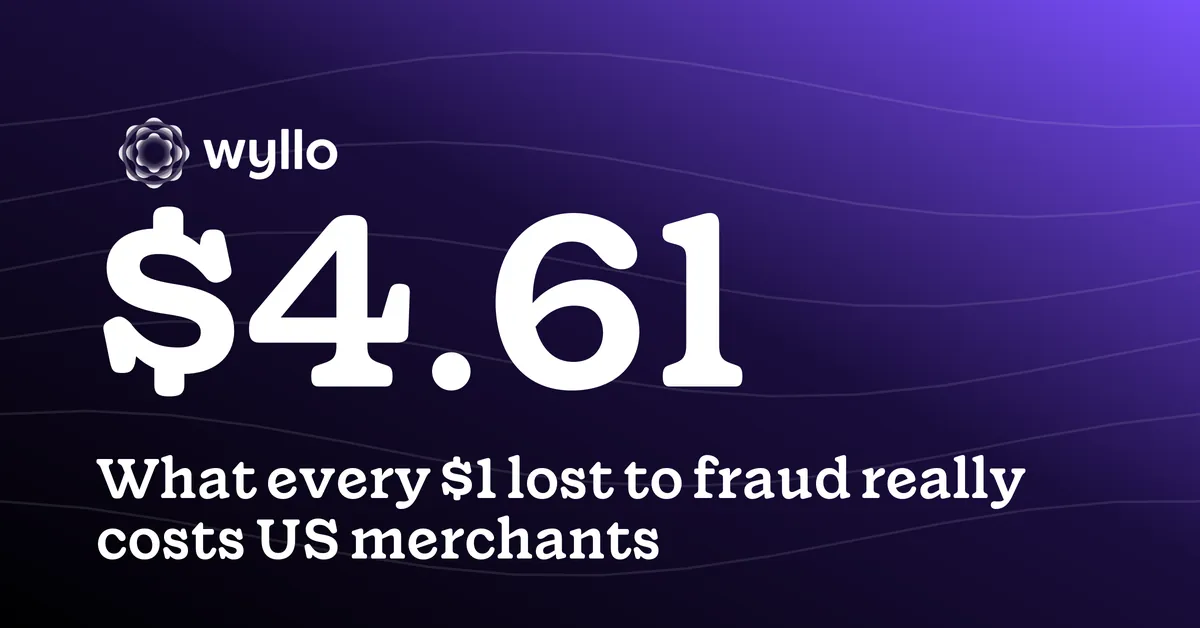
There is also a cost side to the blindness. LexisNexis Risk Solutions’ 2025 True Cost of Fraud study found that every $1 of fraud now costs US ecommerce and retail merchants $4.61 in total, and that 41% of North American merchants still depend on manual processes. Much of that manual work is reassembly: pulling a customer’s story together from four systems before anyone can exercise judgment on it. A customer risk profile does the reassembly once, so the human effort goes to the decision.
A Profile That Works in Both Directions
The name says “risk,” but half the value is trust. A profile that only flags bad actors is a blacklist; a real customer risk profile also tells you who has earned the easy path.
That matters because the cost of treating good customers like suspects is measurable. The same LexisNexis study found 63% of merchants saying fraud controls increase customer churn and 64% saying they hurt conversion. A false decline doesn’t just lose one order; it loses the relationship, and the customer it loses is by definition one who wanted to buy.
Read in both directions, the profile becomes the basis for adaptive treatment. A customer with years of clean history gets fewer verification steps, faster refunds, and the benefit of the doubt on a claim. A customer whose pattern signals farming gets verification, return-required refunds, or tighter terms. The point is not harder policy. It is the right policy for each customer, decided on evidence.
How Merchants Use Customer Risk Profiles
In practice, a customer risk profile changes four everyday decisions:
- Support responses. An agent handling a refund request sees the relationship before replying: net spend, return rate, prior appeasements. A “keep it” refund becomes an informed choice rather than a reflex.
- Returns and claims handling. Return policies right-size to the customer. Trusted shoppers keep instant refunds; repeat claimants get evidence requirements the honest majority never sees.
- Manual review. An analyst reviewing a flagged order starts from the customer’s full history instead of rebuilding it, which shortens reviews and reduces decisions made on partial evidence.
- VIP validation. Segmenting by net contribution instead of gross revenue surfaces the “top customers” who are actually negative-margin, a pattern that survives mostly because nobody wants to challenge a VIP.
How Wyllo Helps
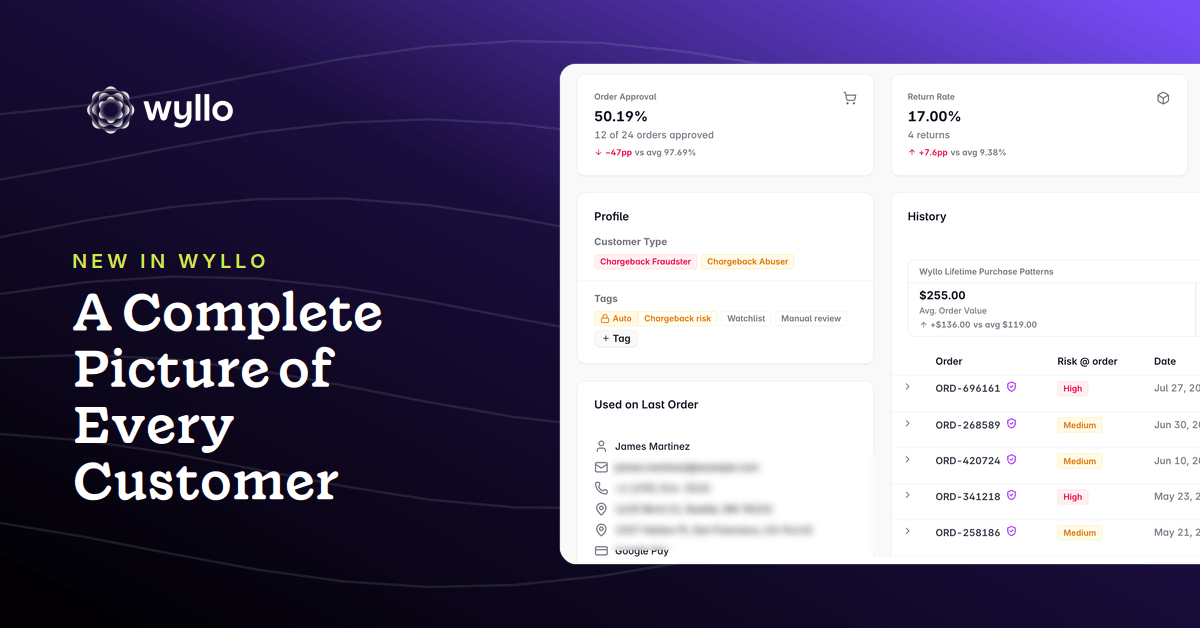
Wyllo, the risk intelligence platform for commerce, built its newest surface around exactly this unit of analysis. Customer Profile gives every customer in a store a single page: spend and profitability metrics, approval rate, returns and chargebacks, full order history with the risk score preserved at each order, an activity log, and tags that route work. The intelligence behind it comes from decisioning that already runs across the journey:
- Wyllo Payment Fraud Protection produces the order decisions and risk scores the profile preserves.
- Wyllo Return Fraud and Abuse Prevention and Wyllo Claim and Policy Abuse Prevention supply the return, refund, and claim behavior that turns spend into a real picture of contribution.
- Wyllo CX Support carries the context into the tools agents already use, so the profile informs the reply instead of requiring a detour.
Judgment over rules: the profile exists so every decision about a customer can be made with the whole customer in view.
Frequently Asked Questions
What is a customer risk profile?
A customer risk profile is a unified record of one customer’s behavior across their relationship with a store, combining order and approval history, returns and refunds, claims and chargebacks, support interactions, and identity and payment signals. It exists so decisions can be made on the pattern rather than on a single event.
How is a customer risk profile different from a risk score?
A risk score is a point-in-time judgment about one transaction. A customer risk profile is the accumulated evidence across every transaction and interaction, including how those scores have trended. Scores answer “is this order risky?”; profiles answer “who is this customer to us?”
What data should a customer risk profile include?
At minimum: full order history with decisions, return and refund behavior, claim and chargeback history, support and appeasement activity, identity and payment signals, and net contribution after returns and claims. The more of the journey it connects, the more legible intent becomes.
Is a customer risk profile just a blacklist?
No. A blacklist only encodes distrust. A customer risk profile works in both directions, identifying the customers who have earned less friction as well as the patterns that deserve more scrutiny, which is how merchants avoid taxing the honest majority for the behavior of a small cohort.
How do customer risk profiles help with returns and refund abuse?
Return abuse is a pattern crime: any single return looks defensible, and the behavior only becomes visible across a history. A profile surfaces return rate, refund-without-return frequency, and repeat claims at the customer level, so policies can tighten for the pattern and stay generous for everyone else.
Bringing It Together
The transaction was never the natural unit of commerce risk; it was just the unit systems could see. Fraud, abuse, and loyalty are all properties of relationships, and relationships need history to be read. A customer risk profile is that history given a page.
Merchants who make the shift stop asking whether an order is bad and start asking what a customer intends, which is a better question with more profitable answers: fewer false declines for the shoppers who earn trust, earlier detection of the patterns that drain margin, and a support team that treats every customer according to who they actually are. See how Customer Profile puts the whole customer on one page, and explore the Wyllo platform to see the connected decisioning behind it.