A working method for measuring policy impact: the metric contract, the cohort comparison, and the counter-metrics that keep a “win” honest.
To measure policy impact, define the outcome metric before the policy ships, compare matched cohorts before and after the change, and track the counter-metrics that would reveal hidden cost, like repeat purchase rate and support contact volume. That is the whole method. Almost nobody runs it, which is why most merchants cannot say with confidence whether last year’s return policy change made money or lost it.
Policy changes are among the highest-leverage decisions in ecommerce and among the least measured. A pricing test gets a dashboard. A homepage variant gets a significance calculation. A restocking fee that touches every customer relationship gets a gut check at the next quarterly review, months after anyone can untangle it from seasonality. The teams that run the discipline properly have learned what the software industry learned about experimentation: intuition about what will work is wrong more often than anyone expects, which is the core finding of Harvard Business Review’s work on online experiments. There is no reason to believe policy intuition beats product intuition.
Step 1: Write the Metric Contract Before You Ship
Every policy change is a hypothesis, and the honest version gets written down before launch: what we are changing, the single metric it should move, the size of the move that justifies it, and the metrics that must not degrade. Two sentences are enough. “Requiring inspection before refund on flagged returns should cut refund-on-scan losses by a third. Repeat purchase rate for unflagged customers must not fall.”
The contract matters because post-hoc measurement is where policy analysis goes to die. After launch, every number can be argued into the story someone prefers. Before launch, the definition of success is cheap to state and impossible to retrofit.
Step 2: Compare Cohorts, Not Calendar Months
The naive readout compares this month to last month, which mostly measures seasonality, promotions, and the news cycle. The better comparison is between cohorts: customers or orders that experienced the policy versus equivalent ones that did not.
Time gives you the simplest version, comparing the sixty days before the change to the sixty after, matched for seasonality against last year. Scope gives you a stronger one: roll the policy out to a subset first, one region, one product category, or one customer tier, and the untouched rest of the business becomes the control group. A staged rollout is a holdout experiment merchants get almost for free, and it converts “we think it helped” into a comparison someone can defend.
Whichever design you use, keep the unit consistent. A return policy acts on customers, not orders, so measure customer-level outcomes: return rate per customer, net contribution per customer, repeat purchase per customer. Order-level averages blur exactly the behavior a policy is meant to change.
Step 3: Watch the Counter-Metrics
The most dangerous policy result is the clean win, because policies rarely act on only one number. Tighten returns and the return rate falls, reliably. The honest question is what else moved: did repeat purchase dip for the customers who felt the new friction, did support contacts rise as customers argued instead of returning, did claims grow as behavior rerouted around the policy, did disputes climb as the bank became the path of least resistance?
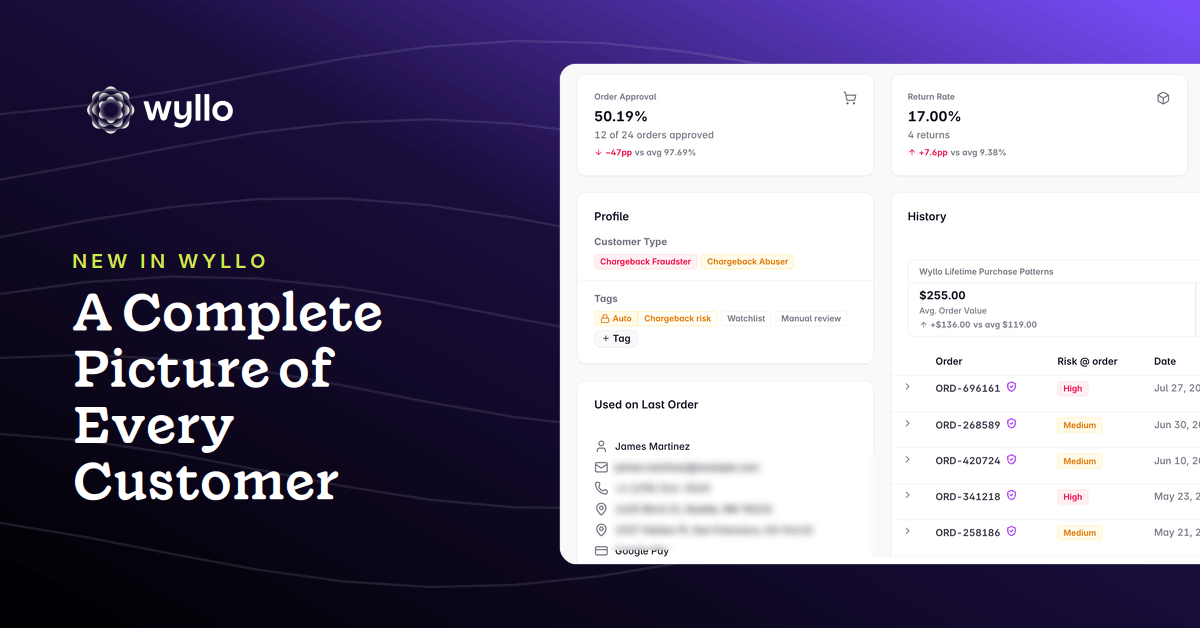
A useful rule: for every metric a policy is supposed to improve, name at least two it could plausibly damage, and put all three on the same page. The pattern to respect is displacement. Behavior blocked in one channel often reappears in another, and only relationship-level measurement, the kind built on a single customer view that includes risk, catches the move.
Step 4: Give It a Time Box and a Decision
A policy evaluation without an end date becomes wallpaper. Set the review for a fixed window, sixty or ninety days for most policy changes, long enough to cover a purchase cycle and short enough that the world has not changed underneath it. At the review, the contract from step 1 gets one of three verdicts: keep, revert, or revise and re-measure.
Reversion has to be a real option, which is culturally the hard part. A policy that failed its own metric contract and stays anyway, because unwinding it is awkward, is how businesses accumulate the strange rule collection that no one can explain three years later. The teams that measure well revert without ceremony, and their policies stay legible.
Step 5: Keep the Ledger
Every evaluated policy change deserves a line in a running ledger: the contract, the cohorts, the verdict, the numbers. The ledger compounds. After a few cycles, patterns emerge that single evaluations cannot show, like which customer tiers absorb friction without churning and which policies displace behavior rather than reduce it. That institutional memory is what turns policy management from a series of reactions into a practice, the same shift covered in why blanket policies price everyone identically.
How Wyllo Helps
Policy measurement lives or dies on seeing behavior across the relationship, and that is what Wyllo, the risk intelligence platform for commerce, is built to read.
- Wyllo Return Fraud and Abuse Prevention tracks return behavior at the customer level, the unit a return policy actually acts on.
- Wyllo Claim and Policy Abuse Prevention reveals displacement, catching the behavior that reroutes into claims when another door closes.
- Wyllo Chargeback Management covers the dispute counter-metric, so a “successful” tightening that pushed customers to their bank shows its true cost.
Insight first. A policy that cannot show its numbers is an opinion with tenure.
Frequently Asked Questions
How do you measure the impact of a policy change?
Define the target metric and acceptable counter-metric movement before launch, compare matched cohorts before and after the change (or use a staged rollout as a control), review at a fixed date, and record the verdict. Measure at the customer level, since policies act on relationships rather than single orders.
What is a counter-metric?
A counter-metric is a number a policy could damage while improving its target: repeat purchase rate for a stricter return policy, support volume for a new verification step, dispute rate for slower refunds. Tracking them alongside the target keeps a narrow win from hiding a broader loss.
How long should you wait before judging a policy change?
Long enough to cover at least one full purchase and return cycle for your category, which is sixty to ninety days for most merchants. Shorter reads react to noise; open-ended reads never conclude. Set the review date when the policy ships.
Can you A/B test a policy?
Often, yes. Staged rollouts by region, category, or customer tier create a natural control group without running a formal experiment platform. Where a true split is impractical or would feel unfair, matched before and after cohorts adjusted for seasonality are the workable substitute.
Bringing It Together
Merchants change policies constantly and measure them rarely, which means the policy book at most companies is a sediment of reactions: rules added after bad quarters, exceptions added after loud complaints, and nobody certain which of it earns its keep. The method above is not statistics-heavy. It is a contract, a comparison, a set of counter-metrics, a deadline, and a ledger.
What the discipline buys is confidence in both directions. Policies that work get kept and extended on evidence. Policies that quietly tax good customers get caught and reverted before the damage compounds. Less reaction. More reason.
Ready to measure policies on the unit they actually act on? Start with what goes into a customer risk profile, or explore the Wyllo platform for relationship-level measurement across the journey.