A return tracking number shows delivered. The customer expects a refund. But the warehouse has no record of receiving the merchandise.
Was the package lost? Delivered to the wrong location? Or was the tracking information deliberately manipulated?
This is the challenge with Fake Tracking ID (FTID) fraud. Fraudsters exploit the gap between what a carrier’s tracking system reports and what a retailer actually receives. A return can appear legitimate in a tracking portal even when the original merchandise never makes it back to the retailer.
For brands processing thousands of returns, the distinction is difficult to identify at scale. Carrier scans are often treated as evidence that a return has been completed, even though a delivery event alone does not establish what was shipped, where it was delivered, or whether the correct item was received.
FTID is particularly challenging because it does not always require a stolen identity, a compromised payment method, or an obviously suspicious customer. The original purchase may be entirely legitimate.
The fraud happens after checkout, when tracking information is manipulated to obtain a refund without returning the merchandise.
Understanding FTID requires looking beyond individual packages and connecting logistics data with customer behavior, return history, and the broader patterns associated with organized post-purchase fraud.
1. What Is FTID Fraud?
FTID stands for Fake Tracking ID, a form of return fraud in which shipping or tracking information is manipulated to create the appearance of a legitimate return.
The objective is straightforward: convince a retailer that a return was shipped, delivered, or otherwise completed when the merchandise has not actually reached its intended destination.
Despite the name, FTID does not always involve an entirely fabricated tracking number.
Some methods exploit legitimate shipping labels or carrier events. Others involve altered shipping information, destination manipulation, or tracking records that do not accurately represent the movement of the expected merchandise.
A package may receive authentic carrier scans while still being diverted away from the retailer’s warehouse.
This distinction matters. A tracking number that scans is not proof of a valid return.
FTID Versus Other Forms of Post-Purchase Fraud
FTID belongs to a broader category of return and policy fraud, but these methods should not be treated as identical.
| Fraud Type | What Happens |
|---|---|
| FTID | Tracking, label, or routing information is manipulated to misrepresent the return or prevent delivery to the intended destination. |
| Empty-Box Fraud | A customer ships an empty or partially filled package while seeking a refund for merchandise they kept. |
| Product Swapping | A customer returns a different, cheaper, counterfeit, or previously used item in place of the original merchandise. |
| Lost-In-Transit (LIT) Fraud | A customer falsely claims a package was lost in transit or deliberately exploits shipping disruption to obtain compensation. |
| Did-Not-Arrive (DNA) Fraud | A customer falsely claims an outbound order was never received. |
| Policy Abuse | A customer repeatedly exploits return or refund policies, potentially without the deliberate deception associated with fraud. |
These behaviors can overlap. For example, an FTID scheme may be designed to make a return appear lost in transit. An empty-box return may also involve misleading shipping evidence.
However, not every empty box, carrier exception, or missing package is an FTID attempt.
The defining feature of FTID is manipulation of the logistics or tracking process to support a fraudulent return.
Recognizing these distinctions allows brands to investigate the appropriate evidence rather than treating every suspicious return as the same problem.
2. How FTID Fraud Exploits the Returns Process
Modern ecommerce returns depend on a series of systems that do not always share the same information, and FTID fraud lives in those gaps.
A returns platform creates an authorization. A carrier records package movements. A warehouse confirms receipt. A customer service team handles questions and refund requests.
When those records are not reconciled, opportunities for fraud emerge.
The vulnerability becomes more apparent when examining three common refund models.
Refund on Scan (ROS)
The refund is initiated after the carrier records an eligible acceptance or drop-off scan.
This creates a convenient experience for legitimate customers, but the first carrier scan does not verify the package contents.
ROS can therefore be vulnerable to empty-box and other fraudulent parcel submissions.
Refund on Delivery (ROD)
The refund is initiated when tracking indicates that the returned package has been delivered.
The critical distinction is whether the package was actually delivered to the authorized returns destination.
A carrier delivery event may not establish that the correct warehouse received the merchandise.
Refund on Inspection (ROI)
The refund is issued after the warehouse receives and verifies the returned merchandise.
Inspection can help identify empty boxes, incorrect items, and product swaps. However, it cannot directly inspect a package that never reaches the warehouse.
In these cases, a fraudulent customer may attempt to use tracking records or customer service interactions to obtain a refund despite the absence of a verified return.
Why Changing Refund Policies Is Not Enough
These policies introduce different opportunities for fraud.
A faster refund process can be exploited before the merchandise is inspected. A more restrictive process may lead fraudsters to manipulate tracking information or escalate claims through customer support.
The solution is not necessarily to delay every refund.
It is to distinguish between legitimate returns and activity that requires additional verification.
3. How do different FTID methods appear?
FTID fraud is not a single technique. It describes a family of tactics involving shipping labels, tracking information, and carrier workflows.
The specific mechanics vary, but several broad patterns appear repeatedly.
Destination Manipulation
In a destination-manipulation scheme, shipping information is altered or misrepresented so that a package does not reach the authorized returns facility.
In some cases, the carrier’s tracking system may show delivery in the same general geographic area as the warehouse, even though the shipment was delivered to a different address.
This creates an important distinction between a package being marked delivered and the retailer actually receiving it.
Tracking and Label Discrepancies
Other schemes involve inconsistencies between shipping information, carrier records, and the return authorization.
A tracking number may be associated with the wrong shipment, or the tracking details may not correspond to the expected carrier, recipient, or destination.
These discrepancies do not automatically establish fraud. However, they warrant investigation when the available shipping evidence cannot be reconciled with the authorized return.
Manipulated or Suspicious Transit Outcomes
Some fraudulent returns are associated with unusual carrier events, such as repeated routing exceptions, unexpected return-to-sender activity, or unexplained tracking interruptions.
A legitimate package can experience all of these problems.
What makes an event suspicious is the larger context: where the package originated, where it was supposed to go, whether the transit history makes sense, and whether similar outcomes appear repeatedly across related customers.
Fraud-as-a-Service
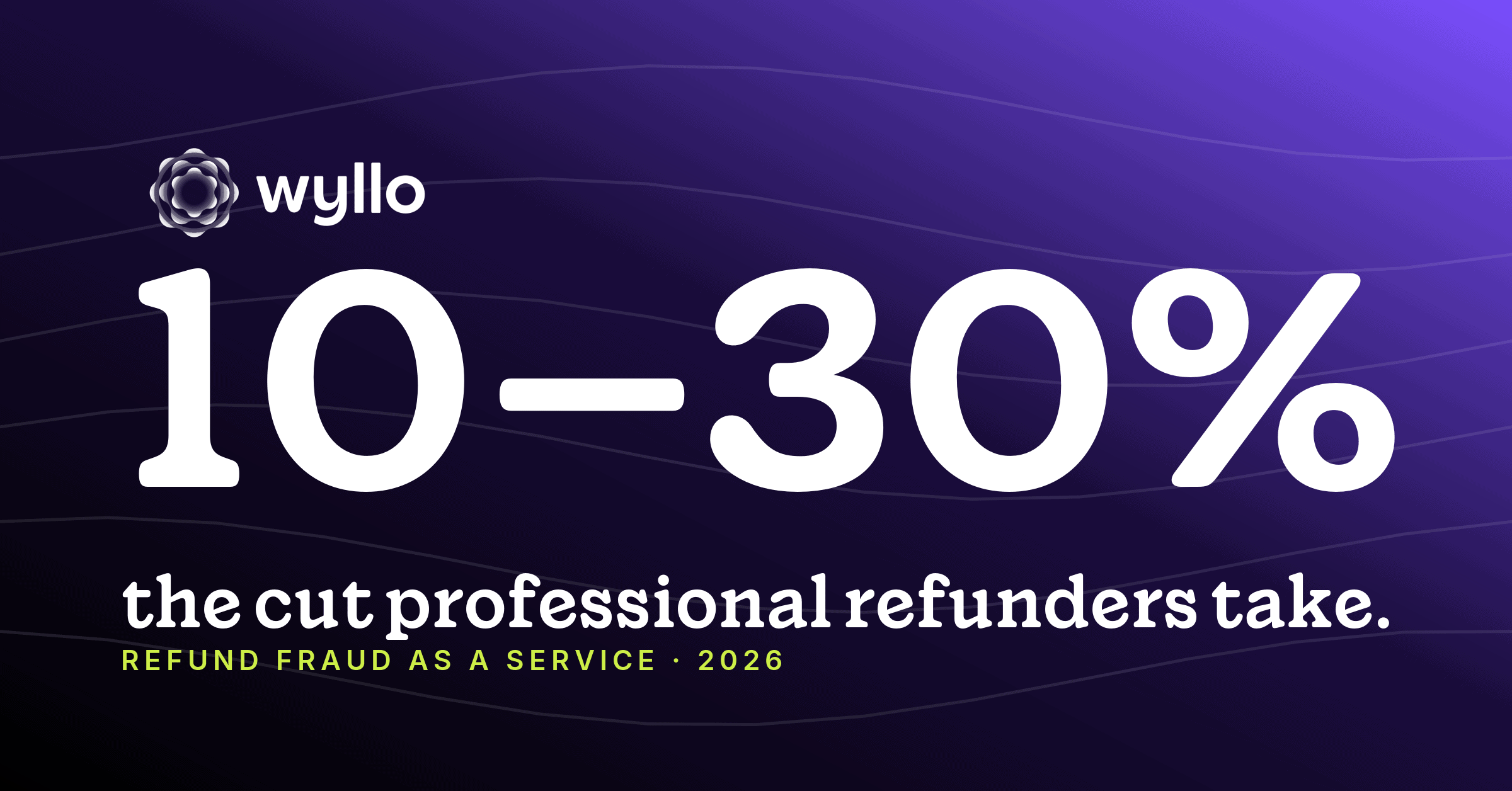
FTID has also become part of a broader fraud-as-a-service ecosystem.
Rather than independently learning how to exploit a retailer’s return process, an individual can pay a third party to facilitate a fraudulent return.
These services may specialize in particular carriers, retailers, or refund policies. Some of these services refer to their approach as the “FTID method” and to the resulting payout as an “FTID refund.”
This changes how fraud appears in the data. The person placing the original order may not be the person coordinating the return or communicating with customer support.
A single actor or service may also facilitate attempts across multiple customer accounts and retailers.
For brands, this means a series of seemingly unrelated return discrepancies may be part of a coordinated operation.
4. How to Identify Potential FTID Fraud
FTID fraud detection begins by examining whether the logistics evidence matches the expected return journey.
But the strongest investigations do not stop at the tracking number.
They connect shipment information with order history, customer behavior, and related accounts.
Tracking does not match the authorized destination.
A carrier shows delivery, but the retailer cannot verify receipt at the intended returns facility.
The investigation should establish the actual delivery location, recipient information, and proof of delivery where available.
A matching city or ZIP code alone may not be enough to confirm that the correct facility received the package.
Unusual Drop-Off Geography
The location where a return enters the carrier network may be inconsistent with the customer’s delivery address or expected return journey.
For example, a return may originate hundreds of miles from the address where the original order was delivered.
There are legitimate explanations, including travel, relocation, and third-party shipping arrangements. However, recurring geographic anomalies across multiple related accounts may indicate coordinated activity.
Inconsistent Tracking Events
Unexpected routing, repeated carrier exceptions, unexplained changes to shipment information, or implausible transit sequences can indicate that the shipping history deserves closer examination.
The important question is not simply whether an exception occurred, but whether the full sequence is consistent with a legitimate return.
Carrier data quality also varies by shipping service, so missing details should not automatically be interpreted as manipulation.
Warehouse and carrier records do not agree.
A return is marked delivered, but the warehouse has no corresponding receiving event.
This is one of the most important discrepancies to investigate.
Brands should compare carrier information with receiving logs, return authorizations, shipment identifiers, and package-level documentation where available.
The goal is to establish whether the discrepancy reflects a receiving delay, a carrier issue, or a potentially fraudulent return.
Repeated Suspicious Returns or Claims
One missing return may be an operational issue.
Repeatedly missing returns tied to the same customer, device, shipping address, or network of accounts warrant a different level of attention.
Relevant patterns include recurring refund requests, multiple disputed returns, unusual return timing, and repeated carrier discrepancies.
Changes in Customer Behavior
Customer service interactions can add important context.
A customer may provide inconsistent explanations, reference different shipping outcomes across conversations, or pursue multiple refund paths for the same transaction.
These behaviors do not independently prove fraud. Legitimate customers also become frustrated when returns are delayed or lost.
The value comes from examining these interactions alongside verified logistics discrepancies and broader account behavior.
No single signal should determine whether a return is fraudulent. The combination of signals is what makes the investigation meaningful.
5. Why Organized FTID Fraud Is Harder to Detect
Traditional fraud prevention often focuses on individual transactions at checkout, before FTID fraud even begins.
Is the payment legitimate? Does the shipping address match? Is the customer identity suspicious?
Those checks remain important, but they do not fully address post-purchase fraud.
A bad actor can place a legitimate order using their own payment information, receive the merchandise, and only initiate fraud during the return process.
By that point, conventional checkout checks may have little relevance.
Organized fraud adds another layer of complexity.
An individual may operate multiple accounts, use different email addresses, vary shipping destinations, or enlist third-party services to handle particular parts of the return process.
Viewed separately, each return may appear unremarkable.
Viewed together, the activity may reveal recurring geographic anomalies, linked devices, similar refund behavior, and repeated interactions with the same logistics networks.
This is why customer identity alone is insufficient.
The question is not only who initiated the return. It is whether that return belongs to a broader pattern of suspicious behavior.
One Bad Actor, Multiple Opportunities for a Refund
FTID also rarely exists in isolation from other forms of post-purchase fraud.
An individual attempting to obtain a refund may move between different claims and return methods, depending on the retailer’s policies and earlier outcomes.
A shipping claim may be followed by a fraudulent return attempt. A rejected return may lead to a product claim or chargeback.
In more complex cases, multiple reimbursement channels can create opportunities for duplicate compensation.
This is not a universal sequence, and many claims are legitimate.
However, it illustrates why evaluating each support ticket, return, and chargeback independently can leave important information disconnected.
A complete investigation needs visibility into the customer’s activity across the post-purchase journey.
6. FTID Fraud and the Problem With Blanket Return Restrictions
When brands experience FTID fraud or other return fraud, the instinctive response is often to introduce additional controls for every customer.
Refunds are delayed. More returns require inspection. Customer service teams request additional documentation. Return policies become more restrictive.
These changes may prevent certain losses, but they also introduce friction for customers who have done nothing wrong.
Importantly, different forms of fraud respond to different controls.
Physical inspection can uncover an incorrect item or empty box, but it does not explain why a carrier marked a package delivered to the wrong location.
A customer identity check may confirm who placed an order without revealing whether that individual has participated in suspicious return activity.
And a blanket refund delay does not identify organized fraud patterns spanning multiple accounts.
A More Effective Approach Is Risk-Based Verification
Instead of treating every customer as equally suspicious, retailers can use risk intelligence to determine where additional verification is warranted.
For example:
- Lower-risk returns: Continue through the standard, convenient refund experience.
- Returns requiring attention: Receive additional validation of the customer, package, or shipping information.
- Higher-risk returns: Undergo a more detailed investigation or verification process before a final decision, consistent with applicable policies and legal requirements.
These are illustrative responses, not fixed risk percentages or universal thresholds.
The appropriate intervention depends on the merchant’s policies, available evidence, return category, and operational capabilities.
The objective is to make the customer’s experience proportionate to the actual risk.
7. A Practical Framework for Investigating FTID Fraud
Effective FTID fraud prevention is not based on one verification step. It requires connecting information across the return lifecycle.
Step 1: Validate the logistics evidence
Compare the return authorization with the carrier’s tracking history and the intended returns destination.
Where available, confirm the package’s delivery location, recipient, shipment details, and supporting carrier records.
A carrier scan is a starting point for verification, not the conclusion of the investigation.
Step 2: Reconcile warehouse receipt
Determine whether the warehouse received and processed the expected return.
Investigate discrepancies between delivery events and receiving records, accounting for normal processing delays and operational exceptions.
When a package arrives with unexpected contents, preserve relevant receiving evidence and documentation.
Step 3: Review the customer’s history
Examine the customer’s previous orders, returns, claims, refunds, and chargebacks.
Consider whether the current return represents an isolated exception or part of a recurring pattern.
Return frequency alone is not evidence of fraud. Context, prior outcomes, and behavioral consistency are essential.
Step 4: Identify related accounts and patterns
Look beyond the individual customer record.
Connections across accounts, devices, addresses, and repeated logistics anomalies may indicate that multiple returns are associated with the same underlying actor.
Where permitted and available, cross-merchant intelligence can provide additional context about repeat behavior.
Step 5: Apply the appropriate response
Once the available evidence has been reviewed, determine the appropriate action based on risk, policy, and the facts of the case.
That may mean processing the refund, requesting clarification, investigating with a carrier, verifying the return contents, or escalating for further review.
Maintain clear documentation of the decision and provide customers with a reasonable path to resolve legitimate discrepancies.
Customer communication matters.
An unresolved tracking discrepancy should not immediately become an accusation of fraud.
For example:
“Our carrier shows a delivery event, but our returns facility has not yet confirmed receipt of your package. We’re reviewing the shipment information to understand the discrepancy and will provide an update on the next steps.”
This approach allows a legitimate customer to participate in resolving the issue while giving the retailer an opportunity to verify the evidence.
8. The Metrics That Help Reveal FTID Fraud Exposure
Most brands already measure return volume, refund rates, and processing time.
These metrics are useful, but they do not necessarily identify the FTID fraud behind returns where tracking and physical receipt disagree.
To better understand FTID exposure, retailers should also examine:
- Delivery-to-receipt discrepancies: Returns marked delivered by a carrier without a corresponding warehouse receiving record, after allowing for expected processing time.
- Return origin anomalies: Unusual distances or geographic patterns between the original delivery location and subsequent return drop-off.
- Carrier exception patterns: Repeated routing issues, return-to-sender events, or inconsistent tracking histories.
- Repeat claim activity: Customers or linked accounts associated with recurring missing returns, disputed refunds, or related post-purchase claims.
- Concentrated risk: Whether a disproportionate share of suspicious activity is associated with a small number of customers, accounts, or linked networks.
The objective is not to treat each anomaly as fraud.
It is to identify patterns that warrant investigation and measure how effectively those investigations distinguish legitimate carrier problems from intentional manipulation.
Brands should also monitor the customer experience impact of any interventions, including refund delays, support contacts, and incorrectly flagged returns.
Fraud prevention is only effective when both loss reduction and customer experience are considered.
9. How Wyllo Helps Brands Detect FTID Fraud and Other Return Fraud
Wyllo approaches return fraud as a customer intelligence problem, not simply a package inspection problem.
Fraudulent returns often become identifiable through the relationship between customer behavior, transaction history, logistics events, and activity across accounts.
Wyllo Return Fraud and Abuse Prevention brings these signals together to help retailers identify suspicious behavior that may not be apparent when evaluating an individual return.
Connected Customer Intelligence
Wyllo analyzes customer and transactional relationships to identify patterns associated with fraud and policy abuse.
By linking available customer, order, return, and behavioral information, brands can better understand whether suspicious activity reflects an isolated exception or a repeat pattern.
This is especially valuable when bad actors use multiple accounts or identities to make individual transactions appear unrelated.
Return and Logistics Risk Signals
Wyllo can incorporate return behavior and available logistics information into its risk assessments, helping identify patterns such as unusual return activity, geographic discrepancies, and suspicious tracking outcomes.
These signals support investigations into potential FTID and related forms of return fraud.
The availability of individual signals depends on the data provided by the merchant, partners, and connected systems.
Risk Scoring and Proportional Intervention
Wyllo evaluates suspicious activity in context, considering factors such as behavioral patterns, frequency, related identities, and potential financial impact.
This allows merchants and their partners to use risk intelligence when determining where additional verification or investigation may be appropriate.
Rather than imposing the same controls on every return, brands can use the available risk information to support differentiated customer experiences.
The merchant remains responsible for its policies and operational decisions.
Risk Intelligence at the Point of Return
Wyllo also works with Happy Returns, providing risk scoring that supports fraud prevention within the return drop-off experience.
This partnership demonstrates how customer intelligence can extend beyond the ecommerce storefront and into physical return workflows.
When risk information is available at the point of return, it can inform verification decisions closer to where the merchandise enters the return network.
Together, these capabilities address a central challenge in return fraud prevention: recognizing suspicious behavior before it becomes another isolated refund loss.
10. FTID Fraud: Frequently Asked Questions
What does FTID stand for?
FTID stands for Fake Tracking ID. The term describes return schemes in which tracking shows a carrier scan or delivery, but the returned merchandise does not arrive at the retailer’s authorized returns facility.
What is an FTID refund?
An “FTID refund” is what refund services call the payout from an FTID scheme: a refund issued on the strength of manipulated tracking for merchandise the retailer has not received.
Can a scammer fake a tracking number?
Yes. A fake tracking number, whether fabricated or reused, is one FTID tactic, but some FTID schemes use real labels and authentic carrier scans while the package is diverted away from the retailer’s returns facility.
How do you prevent FTID fraud?
Brands reduce FTID fraud exposure by checking the carrier’s tracking against the authorized returns destination, reconciling delivery with warehouse receipt, and reviewing the customer’s history and linked accounts before the refund is released. A risk-based approach keeps the standard refund experience for trusted customers and adds friction only where it’s earned.
Is FTID the same as an empty-box return?
No. FTID involves manipulating tracking or shipping information, while empty-box fraud involves returning a package without the merchandise expected inside.
Both can appear within the same fraud scheme, but their underlying mechanics and evidence requirements differ.
Does a delivered tracking status prove that a return was received?
Not necessarily.
A delivered status records a carrier event. Retailers may need additional information to confirm that the shipment reached the authorized returns facility and corresponds to the expected merchandise.
Can warehouse inspection prevent FTID?
Warehouse inspection is useful for identifying missing, incorrect, or substituted items in packages that arrive.
However, it cannot directly inspect merchandise that never reaches the warehouse.
FTID investigations therefore require logistics validation alongside other available evidence.
Does every suspicious tracking event indicate fraud?
No.
Carrier delays, scanning errors, receiving backlogs, and legitimate shipment exceptions can create similar discrepancies.
Fraud determinations should consider corroborating evidence and broader behavior, not a single tracking anomaly.
Will requiring inspection for every return eliminate FTID?
No.
Inspection can reduce exposure to certain fraudulent returns, but it does not resolve all forms of tracking manipulation, false claims, or coordinated post-purchase fraud.
A risk-based approach helps target verification where it is most useful.
Why is cross-account intelligence important?
Organized fraudsters may operate through multiple customer profiles or rely on third parties to facilitate their returns.
Linking related activity can reveal repeated behavior that may not be visible in an individual customer’s return history.
Can FTID lead to chargebacks?
Yes.
When a refund request is denied or remains unresolved, a customer may dispute the transaction with their payment provider.
In those situations, documented tracking discrepancies, warehouse evidence, customer communications, and account history can help establish what occurred.
A chargeback is not itself proof of fraudulent intent.
How does Wyllo help detect FTID fraud?
Wyllo Return Fraud and Abuse Prevention produces risk scores from customer behavior, order and return history, activity across related accounts, and, where available, logistics signals. Brands can use those scores to decide where additional verification is warranted.
11. Bringing It Together: Detecting the Fraud Behind the Tracking Number
FTID fraud exposes a fundamental limitation in traditional returns processing.
A tracking number can establish that a carrier recorded an event. It cannot, on its own, establish that the correct merchandise was returned to the correct destination.
For retailers, preventing this fraud requires connecting information that has historically been fragmented across shipping carriers, warehouse operations, returns platforms, customer service teams, and fraud systems.
It also requires recognizing that the most sophisticated post-purchase fraud is rarely limited to one return or one customer account.
The same actors may exploit multiple policies, accounts, and merchants, adapting their approach as individual methods stop working.
Stricter refund policies alone cannot address that complexity.
The goal is not to make returns harder for every customer. It is to recognize the behavior that makes certain returns risky.
With stronger logistics verification, connected customer intelligence, and proportionate interventions, retailers can protect revenue while preserving the returns experience legitimate customers expect.